A circuit may work perfectly in a design file, but that does not mean the finished board will work the same way in real life.
Before an electronic product reaches mass production, the PCB normally needs to go through fabrication, component assembly, inspection, and testing. This is where a prototype becomes useful. It gives the design a chance to prove itself in the real manufacturing environment before a larger production run begins.
For engineers, this process is familiar. For purchasing teams, product managers, and companies that are new to PCB manufacturing, however, the process can be less obvious.
So, what actually happens after a prototype PCB design is sent to a manufacturer?
1. What Happens Before the Prototype Is Assembled?
The first step is usually a review of the manufacturing data.
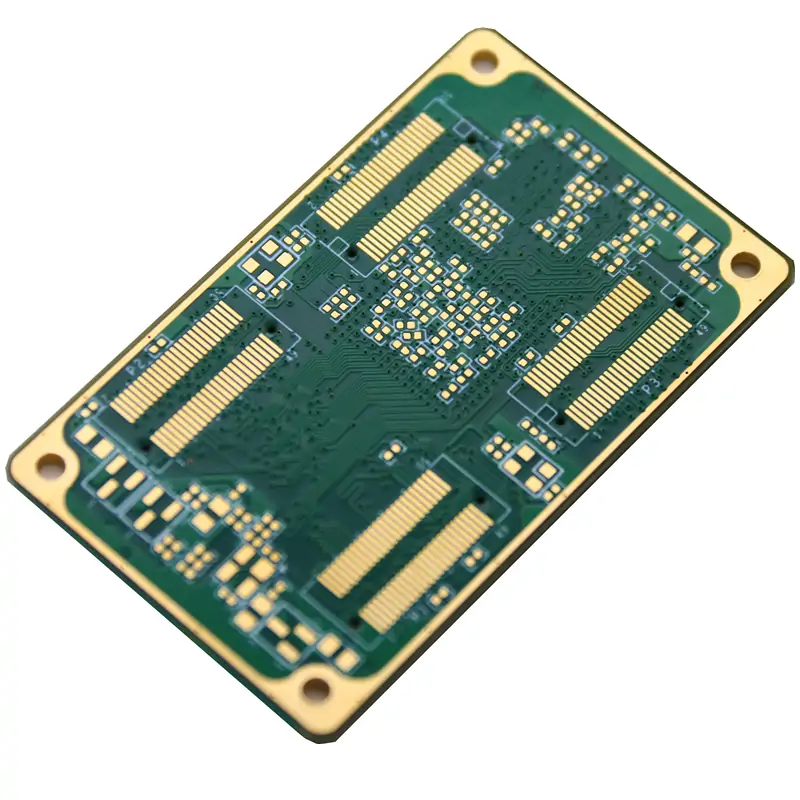
For a bare PCB, the production package may include Gerber files, drill data, board specifications, and other fabrication requirements. If the project includes PCBA, the manufacturer will normally need more information, such as the Bill of Materials (BOM), Pick-and-Place data, assembly drawings, and any special assembly or testing requirements.
These files tell the manufacturer what needs to be built, which components are required, and where those components should be placed.
A mismatch between files can cause problems even before assembly starts. For example, the PCB layout may be from one revision while the BOM or Pick-and-Place data belongs to an older version. Checking the complete data package is therefore an important part of prototype preparation.
If you want to learn more about the files used in PCB projects, see What File Type Is Used for PCB Designs?.
The manufacturer may also carry out a DFM, or Design for Manufacturability, review. In simple terms, DFM asks whether the design can be produced and assembled without unnecessary manufacturing problems.
A component may be correct in the schematic but have an unsuitable footprint. Two components may be placed too close together for reliable assembly. A connector or other large component may also create an issue with soldering or inspection.
Finding these problems before assembly is usually much easier than finding them after the prototype has already been built.
That is one reason why prototyping is more than simply making a smaller quantity of a product. It is the first practical check between the design and the manufacturing process.
2. How Is a Prototype PCB Assembled?
Once the production data has been reviewed and the materials are ready, the project can move into PCBA assembly.
For a typical SMT board, the process may look like this:
Solder Paste Printing → Component Placement → Reflow Soldering → Inspection
First, solder paste is printed onto the PCB pads through a stencil. The paste provides the solder material needed to connect the components to the board.
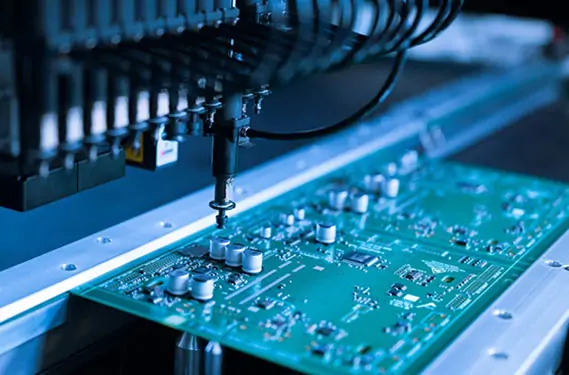
Next, a pick-and-place machine positions components according to the placement data. Resistors, capacitors, ICs, connectors, and other parts may all be involved, depending on the design.
The board then goes through a reflow soldering process. The controlled heating profile melts the solder paste and creates the solder joints that hold the components in place and provide their electrical connections.
Not every prototype uses exactly the same assembly process. Some boards contain through-hole components, large connectors, or other parts that are not suitable for standard SMT placement. In those cases, THT or a combination of SMT and THT may be used.
The choice depends on the board design, component packages, mechanical requirements, and the way the finished product will be used.
For a closer look at the SMT process, you can also visit HRPCBA's SMT PCB Assembly page.
3. How Do You Know if the Prototype PCBA Was Assembled Correctly?
Once the components are soldered, the board still needs to be checked.
The first question is fairly simple:
Were the components actually assembled correctly?
A basic inspection looks for things such as:
-
Missing components
-
Incorrect component placement
-
Wrong component orientation
-
Visible soldering problems
-
Damaged components or PCB areas
Depending on the board and the required inspection level, manufacturers may use visual inspection, AOI, X-ray inspection, or other methods.
AOI, or Automated Optical Inspection, uses cameras to check component placement and identify certain assembly defects. It can be useful for finding issues such as missing or misplaced components and visible solder-related problems.
X-ray inspection is different. It can be used when solder joints cannot be seen directly, which is particularly useful for packages such as BGA where important connections are underneath the component.
There is no rule saying that every prototype must go through every available inspection method.
A simple board with a small number of components may need a very different inspection approach from a dense board with fine-pitch packages or hidden solder joints.
The sensible approach is to match the inspection method to the actual design and product requirements.
4. How Do You Test Whether the Prototype PCB Actually Works?
This is where inspection and testing become two different things.
Inspection asks whether the board was assembled correctly. Testing asks whether the electrical circuit and the finished product actually work.
Basic electrical checks can be used to look for problems such as open circuits and unintended short circuits.
For prototypes and small production runs, Flying Probe Testing can be useful. Instead of relying on a dedicated bed-of-nails fixture, programmable probes make contact with selected test points on the board and perform electrical checks.
This can make the method relatively flexible when a project is still in the prototype stage or when production quantities are limited.
ICT, or In-Circuit Test, is another approach. It uses test points to check aspects of the circuit and, depending on the design and test coverage, can identify certain component or electrical problems. However, ICT requires suitable test access and a test strategy designed around the board.
Then there is functional testing.
Functional testing is closer to the question most customers actually care about:
Does the finished PCBA do what it was designed to do?
Depending on the product, a functional test may involve powering the board, applying specified inputs, checking outputs, verifying communication interfaces, or checking the operation of sensors, control circuits, and other functions.
This distinction matters because a board can look perfectly normal and still fail when power is applied.
HRPCBA also provides PCB Functional Testing as part of its PCBA manufacturing services.
5. What Happens If the Prototype Fails?
A failed prototype is not necessarily bad news.
In fact, finding problems is one of the main reasons for building a prototype in the first place.
Suppose a board has a soldering problem. The next step is not simply to rework the board and move on. The cause may need to be investigated. It could be related to the PCB pad design, stencil, solder paste, component placement, or soldering conditions.
If an electrical test finds an open circuit or short circuit, the investigation may move toward the PCB itself, the component connection, or the solder joints.
A different situation occurs when the board passes basic electrical checks but does not perform its intended function. In that case, the problem could be related to the circuit design, power supply, component selection, firmware, or another part of the system.
This is why prototype testing should not be viewed as simply getting a “PASS” or “FAIL” result.
The useful part is understanding why something failed and deciding what needs to change before the next build.
Sometimes the solution is a PCB design revision. Sometimes it is a component change. Sometimes the design is fine and the problem is in the assembly process.
The earlier that distinction is made, the less expensive it usually is to correct.
6. What Should Customers Look for in a Prototype PCB Supplier?
When a prototype is expected to move toward small-batch or mass production, the supplier's capabilities become increasingly important.
A supplier does not necessarily need to offer every possible manufacturing process. What matters is whether its capabilities match the project.
| Capability |
Why It Matters |
| PCB Manufacturing |
Produces the bare board according to the design |
| Component Sourcing |
Helps keep the required parts available |
| SMT / THT Assembly |
Supports different component and board requirements |
| DFM Review |
Identifies possible manufacturing problems early |
| AOI / X-Ray |
Helps inspect different types of assembly defects |
| Electrical Testing |
Checks circuit connections and electrical conditions |
| Functional Testing |
Verifies that the assembled board performs as intended |
| Engineering Support |
Helps resolve issues during prototype development |
There is also a practical reason to consider a supplier that can handle more than one part of the process.
If PCB fabrication, component sourcing, assembly, and testing are handled by several unrelated suppliers, the customer may need to coordinate files, revisions, schedules, and technical questions between multiple parties.
A one-stop PCB and PCBA supplier can keep these stages more closely connected.
HRPCBA provides PCB manufacturing, component sourcing, PCBA assembly, and testing services for prototype and production projects. More information is available on the HRPCBA PCBA Prototyping page.
Conclusion
A prototype PCB is where a design meets reality.
A circuit can look correct on a computer and still reveal unexpected problems when it is manufactured and assembled. That is why the prototype stage matters.
The process starts with checking the production files and continues through PCB fabrication, component placement, soldering, inspection, electrical testing, and functional verification.
Each step answers a different question.
Was the board manufactured correctly?
Were the components assembled correctly?
Are the electrical connections working?
Does the finished PCBA perform the required function?
If something goes wrong, the prototype provides an opportunity to find the cause and improve the design or manufacturing process before larger quantities are produced.
For companies developing a new electronic product, working with a supplier that can support PCB manufacturing, PCBA assembly, inspection, and testing under one workflow can make the path from prototype to production much easier to manage.



 PCB AssemblyHRPCBA is a PCBA China manufacturer offering high-quality PCB assembly services with full-process support, from design to assembly and testing.
 PCB ManufacturingHRPCBA is a leading PCB board manufacturer offering precision PCB fabrication services. Get high-quality boards with fast turnaround and competitive pricing
 CapabilitiesDiscover HRPCBA’s robust PCB capabilities in custom PCB manufacturing services, where we transform your ideas into high-quality, functional circuit boards.