HRPCBA is a leading PCB board manufacturer offering precision PCB fabrication services. Get high-quality boards with fast turnaround and competitive pricing
Discover HRPCBA’s robust PCB capabilities in custom PCB manufacturing services, where we transform your ideas into high-quality, functional circuit boards.
SMT Assembly Service in Shenzhen — 24 Lines, From 1 Piece
PCB assembly refers to the mounting of components onto a PCB board to form a complete circuit system.
We do that in one plant in Shenzhen: 24 SMT lines, through-hole, inspection and functional test under one quality
standard, from one piece up. What your engineering team asks first is whether the line takes the board — the
numbers are below.
SMT lines
Smallest part
Max board through assembly
Minimum order
24
01005
450 × 470 mm
1 piece
The steps of PCB assembly can be divided into two main categories: surface mount technology (SMT) and through-hole mount technology (THT).
Founded in Shenzhen in 2005
Hongrong (Shenzhen) Electronics Co., Ltd. builds boards in one plant rather than brokering them out:
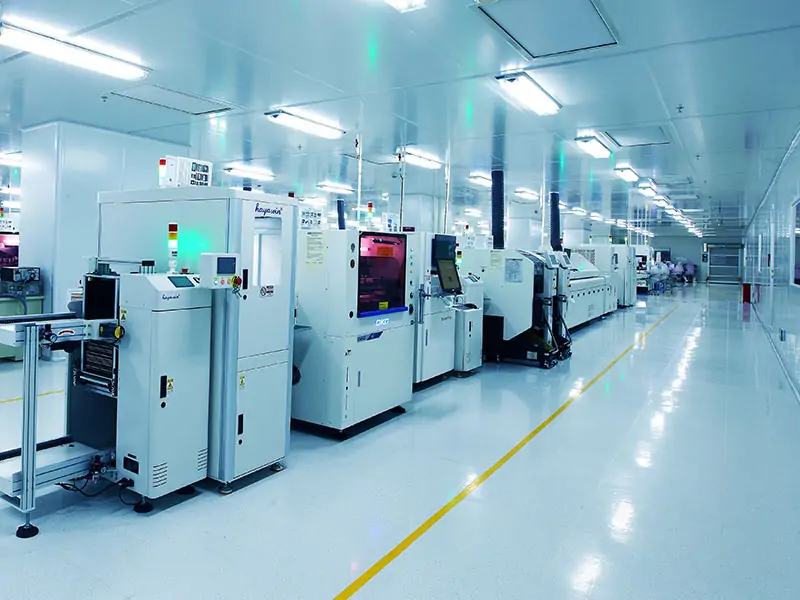
24 SMT lines (13 YAMAHA, 4 Panasonic, 7 JUKI) at 40.39 million points a day, and
6 DIP lines for the parts a machine cannot place. Fabrication, component sourcing, assembly and test sit
on the same site, so a board that fails inspection goes back into the line the same day rather than onto a truck.
Work is held to IPC-A-610 Class III and ISO 9001 in-house, with
IATF 16949 and ISO 13485 available through certified partner plants.
WHat is SMT Assembly?
SMT (Surface Mount Technology) is an automated PCB assembly process that mounts electronic components onto boards through solder paste printing, high-speed placement, and reflow soldering. Compared to traditional methods, SMT offers higher density, greater reliability, lower cost, miniaturization, and full automation.
SMT assembly according to different type of pcb has different assembly procedures, but the core steps include:solder paste printing → component placement → reflow soldering → AOI inspection.
AOI is a necessary part of SMT production line, which can strictly control the quality of shipments, improve production efficiency and save costs. X-Ray Inspection: X-ray irradiation checks the soldering quality of hidden solder joints.
HRPCBA operates 24 SMT lines, all compliant with IPC-A-600G Class 1/2/3 standards.
What the line can take
Placement lines
24 SMT lines — 13 YAMAHA, 4 Panasonic, 7 JUKI
Placement throughput
40.39 million points per day
Component range
01005 (smallest) to 2512 (largest)
BGA pitch
0.3 mm – 1.25 mm
Maximum board size
450 × 470 mm through assembly (fabrication accepts more, the line does not)
Through-hole
6 DIP lines, including 4 automatic plug-in lines at 800,000 points per day
Standards
IPC-A-610 Class III and ISO 9001 in-house; IATF 16949 and ISO 13485 through certified partner plants
Order size
From 1 piece
Hong Rong provides one-stop PCBA service including: PCBA solution design, PCB fabrication, component procurement, PCBA sampling, SMT SMD soldering, AOI/SPI/X-Ray inspection, complete machine assembly, and delivery.
PCB Production
Customer provides Gerber file
Component Procurement
BOM List provided by customer
PCBA Assembly
Assembling pcba according to Gerber file + BOM list provided by customer
Finished Product Assembly
If the customer has a need for shell assembly, we can help customers do shell assembly, or help customers to produce shell.
Product Function Test
In accordance with the test methods provided by the customer to verify the quality of the products we produce.
Customized Product Packaging
If the customer product has its own color box requirements, can be customized.
Main Characteristics Of SMT:
Miniaturization: Supports micro-components (01005/0201) and double-sided PCB assembly for compact modern electronics.
Automation:
Fully automated production (solder paste printing, pick-and-place, reflow soldering) ensures high efficiency for prototypes and mass orders.
Eco-Friendly:
Lead-free soldering compliant with EU RoHS standards.
Flexibility:
Hybrid assembly (SMT+THT) with multi-substrate compatibility (FPC, ceramic, etc.).
PCB assembly involves application areas such as:
Medical electronics, automotive electronics, military electronics, industrial electronics, consumer electronics, communication electronics, smart home, ITO, security electronics, etc.
Customized PCBA process:
Provide your idea and requirements for your product
Brainstorming with each otherand defining the product
Design schematic diagram
Layout and simulation
Prototyping and sample Testing
Confimmation sample we will arrange bulk production
Our Advantage
Since 2005, HRPCBA has grown into a first-class manufacturer of PCB and PCBA assembly. We provide ourcustomersWith PCB solutions and services worldwide.especially more than 90%Printed circuit board are exported tooversea market
» One-stop service
One-stop service for orders from design to delivery.
Flexible solutions can be adjusted according to customer's needs.
» Competitive price
Global electronic components supply chain services.
Own production line to save costs, no middlemen.
Flexible pricing according to market changes (with price protection).
» Fast Service
2 hours quotation
24-72 hours fast sampling
7 days assembly and testing
Urgent orders can apply for ‘green channel’.
» Quality Control
With traceability system.
Quality control throughout the whole process from material entry to finished product delivery.
Strict compliance with special industry production standards.
» Sales Network
Sales network covers more than 180 countries and regions.
We have three offices worldwide to serve you efficiently.
» Team
In-house ERP to improve efficiency.
Founded in 2005, with a sales team that sits beside the lines rather than in another office.
10+ years of professional engineering team to connect with the whole production process.
To ensure that the board functions properly and meets quality requirements, we will involve some testing in the PCB assembly process:
PCB Assembly Testing
AOI
X-ray Inspection
Visual Inspection
In-Circuit Test (ICT)
Functional Test (FCT, Functional Test)
Flying Probe Test
Boundary Scan Test for BGAs
PCB SMT Assembly Processes
1. PCB Fabrication
2. Solder Paste Printing
3. SPI Inspection (Solder Paste Inspection)
4. Component Placement
5. Pre-Reflow Inspection
6. Reflow Soldering
7. Through-Hole Insertion (THT)
8. Wave Soldering
9. Post-Solder Inspection
10. Rework
11. Functional Testing
12. Cleaning
13. Final Inspection
14. Packaging
Lead time you can put in a plan
Assembly starts when the bare boards arrive. A component on a long manufacturer lead time moves this date more than
the line does — when that is the case, the quote says so before you pay.
Quantity
Assembly + test
Bare boards (reference)
Up to 5 units
7 days
3–4 days prototype
6 – 1,000 units
14 days
8–16 days production
1,001 – 10,000 units
21 days
8–16 days production
Lead time is scheduled by quantity and counted from the day the bare boards arrive; larger runs are scheduled individually.
What moves the price
Driver
Why it costs what it costs
Placement points
Machine time is priced per point. 300 parts is a different job from 3,000.
One side or two
Two sides means two stencils, two setups, two reflow passes and adhesive for heavy parts.
Panel and board size
Smaller boards panelised together amortise setup; a board near 450 × 470 mm consumes the line.
Test level
AOI only, or X-ray for BGA, or full functional test with a fixture you or we build.
Components
You supply (consigned) or we buy (turnkey). Obsolete and long-lead parts carry sourcing risk into the price.
Quantity
Stencil, program, first-article check and setup do not divide by quantity — that is the gap between 5 and 5,000 units.
Common questions
What is the minimum order quantity for SMT assembly? One piece. A single board still carries a full stencil, a placement program, a first-article check and a line setup, and none of those costs divide by quantity.
How long does SMT assembly take? 7 days for up to 5 units, 14 days for 6–1,000 and 21 days for 1,001–10,000, counted from the day the bare boards arrive.
Can you assemble both sides of the board? Yes. A double-sided board runs the line twice, with a second stencil, a second reflow profile and adhesive under parts heavy enough to fall during the second pass.
What files do you need for a quote? Gerbers, a BOM with manufacturer part numbers, a pick-and-place file, the quantity, and the test you need. Without the pick-and-place file we quote placement from the BOM and confirm it during DFM.
Do you also do through-hole assembly and testing? Yes — six DIP lines, plus SPI, AOI, X-ray and functional test, held to IPC-A-610 Class III.
Do you source the components? Either way. Turnkey means we buy to the BOM; consigned means you ship the parts to us. Obsolete and long-lead parts are the usual reason a quote takes longer.
Where to go next
BGA assembly — X-ray inspection and what a 0.3 mm pitch changes.



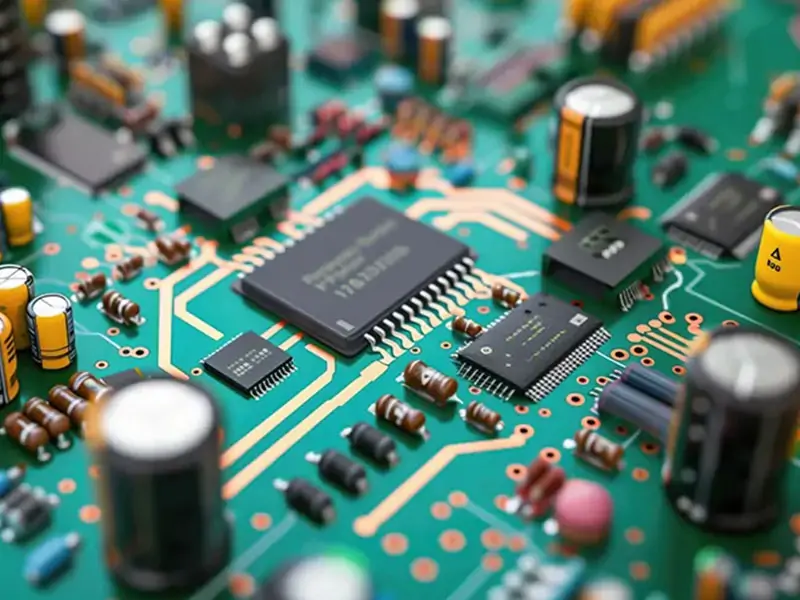 PCB AssemblyHRPCBA is a PCBA China manufacturer offering high-quality PCB assembly services with full-process support, from design to assembly and testing.
 PCB ManufacturingHRPCBA is a leading PCB board manufacturer offering precision PCB fabrication services. Get high-quality boards with fast turnaround and competitive pricing
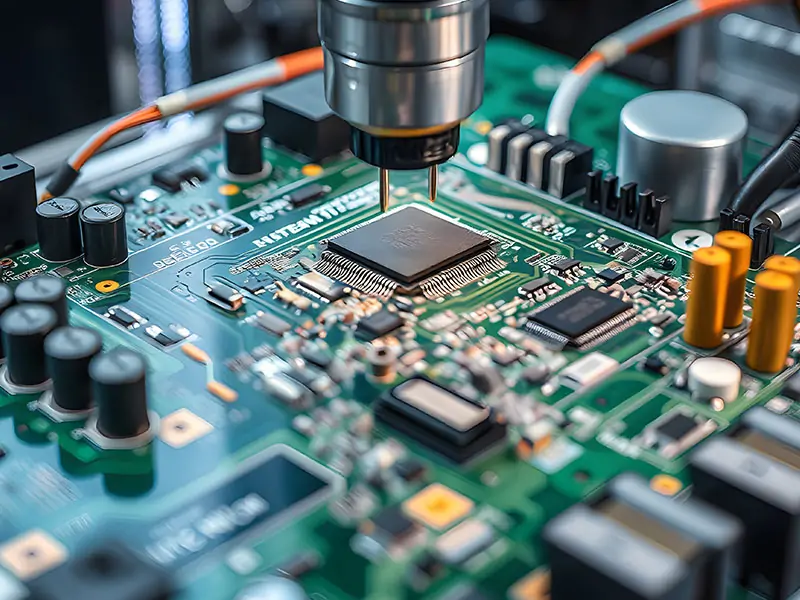 CapabilitiesDiscover HRPCBA’s robust PCB capabilities in custom PCB manufacturing services, where we transform your ideas into high-quality, functional circuit boards.