How Do PCB Fixtures Improve Assembly Efficiency?
When engineers discuss ways to improve PCB assembly efficiency, the conversation usually focuses on SMT equipment, solder paste printing, or reflow soldering profiles. However, there is another factor that can have a significant impact on production stability but often receives less attention: the PCB fixture.
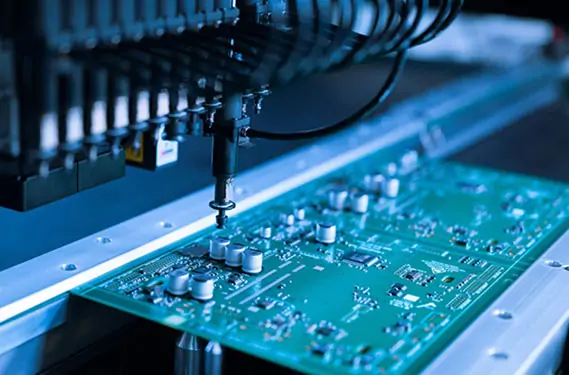
In modern PCB manufacturing and PCB assembly services, fixtures help maintain consistent board positioning throughout production. Whether the goal is improving SMT placement accuracy, reducing PCB warpage, or supporting automated inspection systems, the right fixture can contribute to a more reliable and efficient assembly process.
For manufacturers producing HDI PCBs, automotive electronics, industrial control boards, or medical devices, fixture selection is often an important part of process optimization.
What Is a PCB Fixture?
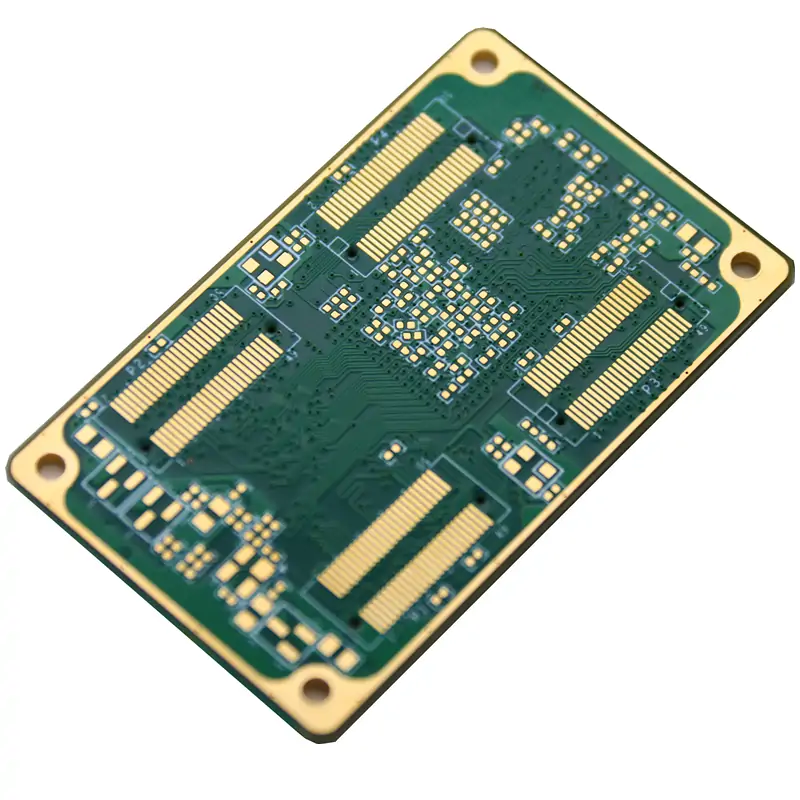
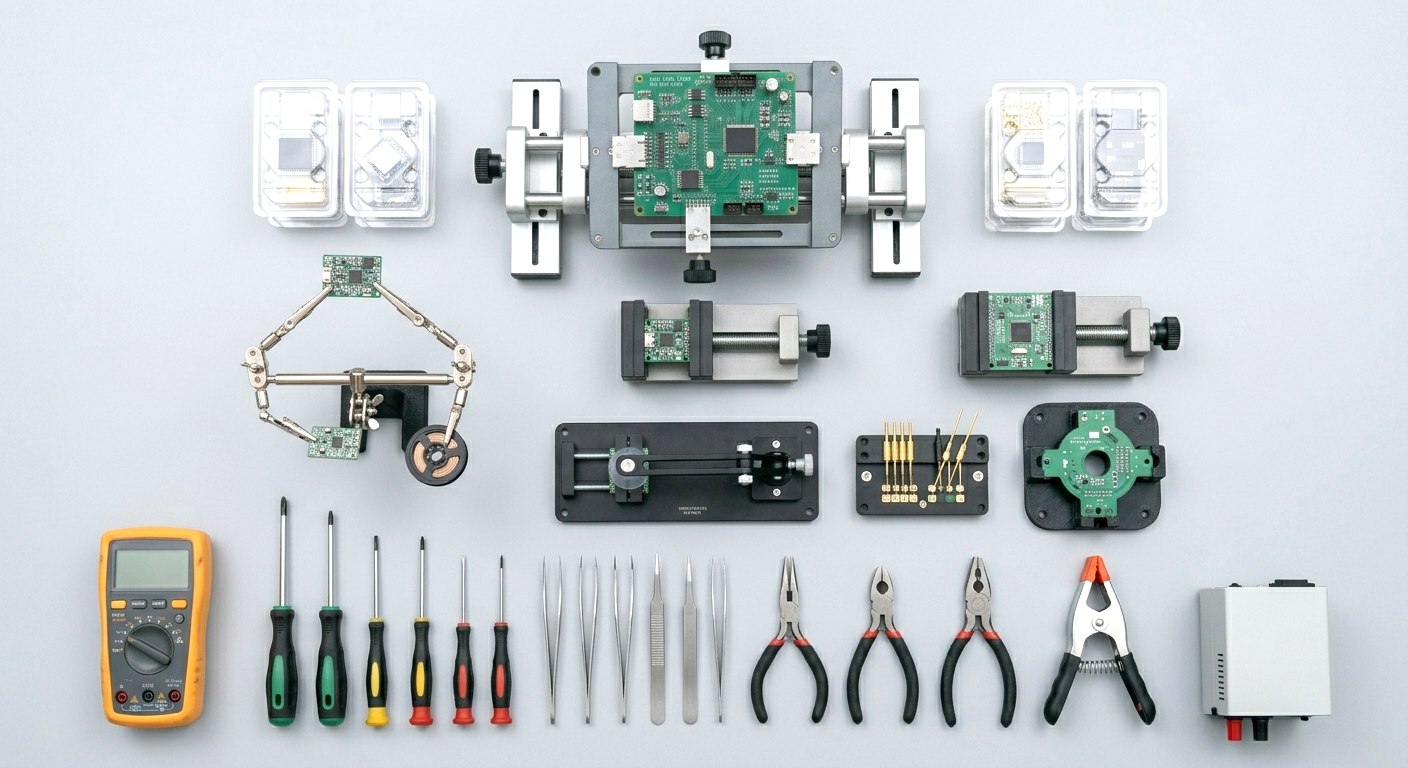
A PCB fixture is a mechanical tooling device designed to hold a printed circuit board securely during assembly, soldering, inspection, or testing.
The primary purpose of a PCB fixture is to ensure that every PCB remains in a repeatable position throughout the manufacturing process.
Typical fixture applications include:
- SMT assembly
- Reflow soldering
- Wave soldering
- ICT testing
- Functional testing
- Manual assembly operations
Without adequate board support, PCB movement can affect placement accuracy and increase production variation.
Why PCB Positioning Matters in SMT Assembly
Modern SMT production lines place thousands of components every hour. As component packages become smaller and PCB designs become denser, positioning accuracy becomes increasingly important.
A slight shift in PCB position may cause:
- Component offset
- Misalignment of fine-pitch devices
- BGA placement issues
- Increased inspection failures
- Additional rework
This challenge is particularly common in:
| PCB Type |
Assembly Challenge |
| HDI PCB |
High component density |
| Thin PCB |
Board flexibility |
| Large PCB |
Potential warpage |
| Automotive PCB |
Strict reliability standards |
By keeping every board consistently positioned, PCB fixtures help reduce variation across production batches.
How PCB Fixtures Help Reduce PCB Warpage
PCB warpage remains one of the most common challenges in electronic manufacturing.
During reflow soldering, repeated heating and cooling cycles can cause stress within the PCB structure. Thin boards, large panels, and multilayer PCBs are often more susceptible to deformation.
Rather than immediately modifying a PCB design, manufacturers frequently introduce reflow fixtures to provide additional mechanical support.
Benefits include:
- Improved board flatness
- More consistent solder joints
- Reduced assembly defects
- Better long-term reliability
If your project involves thin circuit boards, you may also find our article on PCB thickness selection helpful.
A Real-World Example of Fixture Optimization
Consider a smart home controller assembled on a high-speed SMT production line.
The product utilized a six-layer PCB with multiple large integrated circuits. During pilot production, engineers observed minor board warpage after reflow soldering.
Although the issue did not immediately affect product functionality, it increased placement variability and inspection workload.
Instead of redesigning the board, the manufacturer introduced a dedicated reflow fixture to support critical areas during soldering.
The result was a more stable assembly process and improved consistency across production batches.
This example illustrates an important lesson in PCB manufacturing: process improvements can sometimes solve production challenges more effectively than design changes.
Supporting Automated PCB Assembly
As factories continue investing in automation, repeatability becomes increasingly valuable.
Automated production systems rely on predictable positioning for:
- SMT placement
- AOI inspection
- X-Ray inspection
- Functional testing
- Robotic assembly
A properly designed PCB fixture provides a reliable reference point throughout the production process.
For this reason, fixtures remain important even in highly automated manufacturing environments.
Choosing the Right PCB Fixture
Not every PCB assembly project requires a custom fixture.
For prototype development, universal fixtures may be sufficient. However, dedicated fixtures often become cost-effective when production volume increases.
| Selection Factor |
Consideration |
| PCB Dimensions |
Length, width, weight |
| PCB Thickness |
Structural support requirements |
| Production Volume |
Prototype or mass production |
| Assembly Process |
SMT, DIP, testing |
| Operating Temperature |
Reflow or wave soldering |
The most effective fixture design balances production efficiency, durability, and cost.
PC B Fixtures and HDI PCB Manufacturing
As HDI PCB technology becomes increasingly common, fixture design is becoming more important.
HDI boards typically feature:
- Fine-pitch components
- Microvias
- Higher routing density
- Compact layouts
These characteristics leave less room for assembly variation.
A stable fixture helps ensure that advanced PCB assembly processes maintain consistent quality throughout production.
Conclusion
Although PCB fixtures are often viewed as simple production tools, they play a critical role in modern PCB assembly operations.
From improving SMT placement accuracy to reducing PCB warpage and supporting automated manufacturing systems, fixtures help manufacturers achieve greater process consistency and production efficiency.
At HongRong (Shenzhen) Electronics Co., Ltd., we provide one-stop PCB manufacturing and PCB assembly services, including PCB fabrication, SMT assembly, component sourcing, testing, and turnkey PCBA solutions. By combining advanced manufacturing capabilities with optimized production processes, we help customers bring reliable electronic products to market more efficiently.
FAQ
What is a PCB fixture?
A PCB fixture is a tooling device used to hold a printed circuit board securely during assembly, soldering, inspection, or testing processes.
Why are PCB fixtures important?
PCB fixtures improve positioning accuracy, reduce board movement, help prevent PCB warpage, and increase overall assembly consistency.
Are PCB fixtures necessary for SMT assembly?
While not every project requires a custom fixture, fixtures are often beneficial for thin PCBs, HDI boards, large panels, and high-volume production.
Can PCB fixtures reduce assembly defects?
Yes. Proper fixture design can help reduce placement errors, soldering defects, and production variation, leading to improved manufacturing efficiency.



 PCB AssemblyHRPCBA is a PCBA China manufacturer offering high-quality PCB assembly services with full-process support, from design to assembly and testing.
 PCB ManufacturingHRPCBA is a leading PCB board manufacturer offering precision PCB fabrication services. Get high-quality boards with fast turnaround and competitive pricing
 CapabilitiesDiscover HRPCBA’s robust PCB capabilities in custom PCB manufacturing services, where we transform your ideas into high-quality, functional circuit boards.