HRPCBA is a leading PCB board manufacturer offering precision PCB fabrication services. Get high-quality boards with fast turnaround and competitive pricing
Discover HRPCBA’s robust PCB capabilities in custom PCB manufacturing services, where we transform your ideas into high-quality, functional circuit boards.
How Thick Should Your PCB Be for Long-Term Reliability?
Introduction
For the vast majority of electronic products, a PCB thickness of 1.6mm remains the optimal choice for balancing long-term reliability, mechanical strength, and manufacturing costs. However, requirements regarding PCB thickness vary depending on the specific type of electronic product. Ultra-thin consumer electronics typically utilize thin-board designs ranging from 0.4mm to 0.8mm, whereas industrial control systems, power modules, and automotive electronics tend to favor PCBs of 2.0mm or even greater thickness to enhance vibration resistance, thermal dissipation, and long-term stability.
When designing PCBs, many engineers typically prioritize the selection of components, routing, and functional implementation, often overlooking the fundamental parameter of PCB thickness. However, PCB thickness affects not only structural integrity but also thermal dissipation, impedance control, solder joint longevity, and long-term reliability in demanding environments. So, just how thick should a PCB be? Is the standard 1.6mm thickness suitable for every product? In this article, I will systematically analyze the rationale behind selecting PCB thickness, drawing upon IPC standards, industry expertise, and real-world application scenarios.
Why Does PCB Thickness Affect Long-Term Reliability?
PCB thickness is far more than just a physical dimension. It directly influences the mechanical performance, electrical characteristics, and thermal stability of the entire product. Many PCBs may pass initial functional testing but later develop issues such as board warping, cracked solder joints, loose connectors, or signal instability after long-term use. In many cases, these failures are closely related to improper PCB thickness selection.
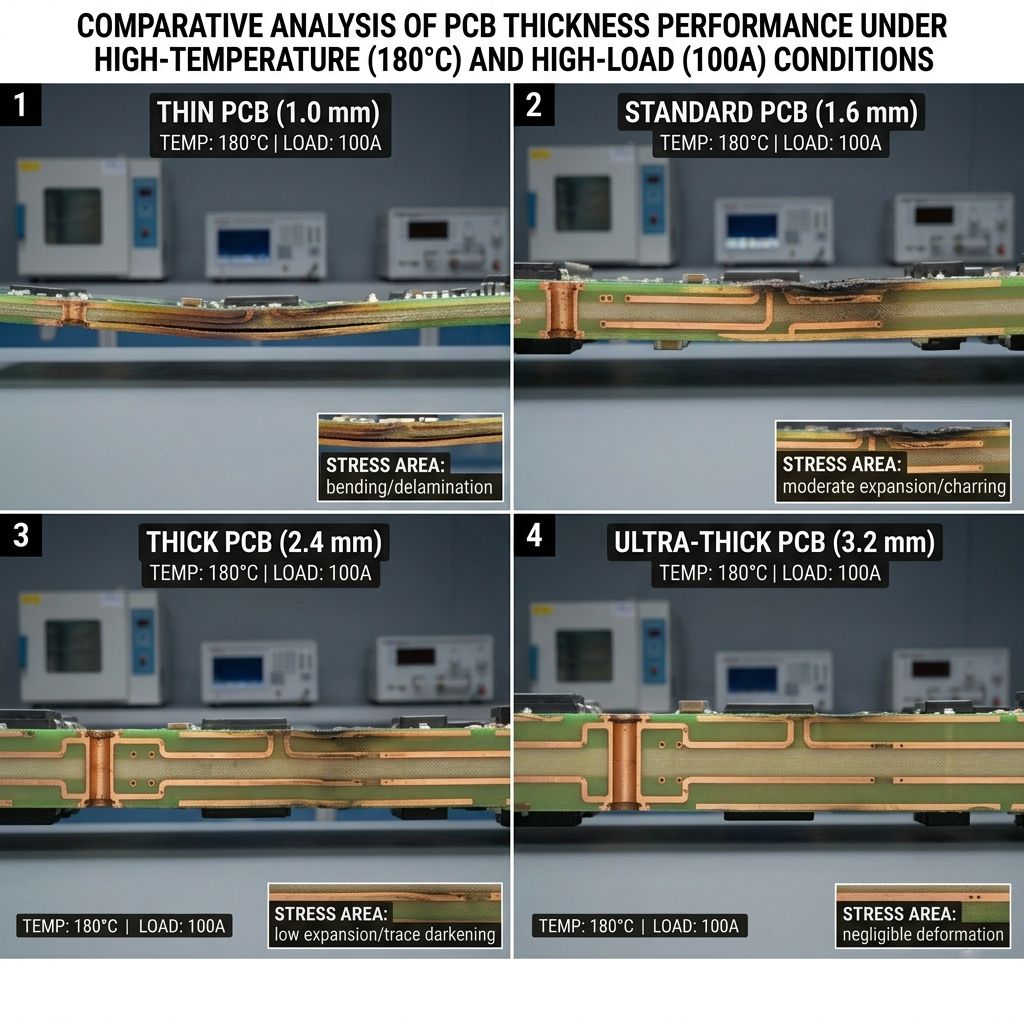
From a mechanical perspective, thicker PCBs provide greater rigidity and better resistance to bending. This is especially important for products with heavy components or frequently plugged connectors. In industrial equipment, automotive electronics, and power systems, PCBs are constantly exposed to heat, vibration, and thermal cycling. If the board is too thin, stress concentration can eventually lead to solder fatigue and structural deformation.
PCB thickness also affects thermal performance. Thicker dielectric and copper structures can provide more stable heat transfer paths, helping high-power components dissipate heat more efficiently. In high-current applications, insufficient PCB thickness can lead to localized overheating, reducing the lifespan of both components and solder joints.
For high-speed and high-frequency PCBs, thickness becomes even more critical because dielectric thickness directly impacts impedance control and signal integrity. Even small thickness variations can cause impedance mismatch, signal reflection, and EMI issues. Therefore, in 5G communication equipment, servers, high-speed backplanes, and RF applications, PCB thickness is not just a structural concern—it is also an electrical performance factor.
Why Has 1.6mm Become the Standard PCB Thickness?
In the global PCB industry, 1.6mm (0.063 inch) has become the most widely used standard PCB thickness. This specification originated from early copper-clad laminate standards and gradually became the industry norm through decades of manufacturing practice.
The main reason why 1.6mm remains dominant is that it provides an excellent balance between mechanical strength, manufacturing stability, electrical performance, and production cost. For most consumer electronics, industrial devices, and commercial products, 1.6mm offers sufficient structural support while remaining compatible with standard connectors, enclosures, and assembly processes.
Today, common PCB thicknesses range from 0.2mm to 3.2mm depending on the application.
PCB Thickness
Common Applications
0.2mm–0.4mm
Flexible devices and ultra-thin electronics
0.6mm–0.8mm
Smartphones and wearable devices
1.0mm–1.2mm
Small control boards
1.6mm
Standard industrial and consumer electronics
2.0mm–2.4mm
Power boards and industrial equipment
3.2mm
Heavy-duty industrial applications
For most FR4 PCB applications, 1.6mm remains the most mature, stable, and cost-effective option for mass production.
What Problems Can Thin PCBs Cause? As electronic devices become thinner and lighter, more products are adopting 0.8mm or even thinner PCB structures. However, thinner PCBs are not always better. Extremely thin boards can significantly increase manufacturing difficulty and long-term reliability risks.
Common issues caused by thin PCBs include:
PCB bending and warping
SMT reflow deformation
Reduced connector support strength
Shorter solder joint fatigue life
Poor impedance stability for high-frequency circuits
During SMT reflow soldering, thin PCBs are more sensitive to thermal stress, which can lead to tombstoning, solder bridging, and cold solder joints. In products with frequently plugged connectors, insufficient PCB thickness may also cause pad lifting or solder joint cracking over time.
Is a Thicker PCB Always Better?
Although thicker PCBs generally provide better mechanical strength and vibration resistance, thicker is not always better.
Excessively thick PCBs may introduce several disadvantages, including higher manufacturing costs, increased product weight, more difficult multilayer lamination, and complex drilling processes. In high-speed PCB applications, overly thick dielectric structures may even negatively affect impedance control and signal integrity.
Therefore, the ideal PCB thickness is not about choosing the thickest board possible, but rather finding the optimal balance between mechanical performance, electrical performance, thermal management, and cost.
With over 20 years of PCB and PCBA manufacturing experience, HongRong provides reliable manufacturing solutions for consumer electronics, industrial control systems, automotive electronics, medical devices, and communication equipment.



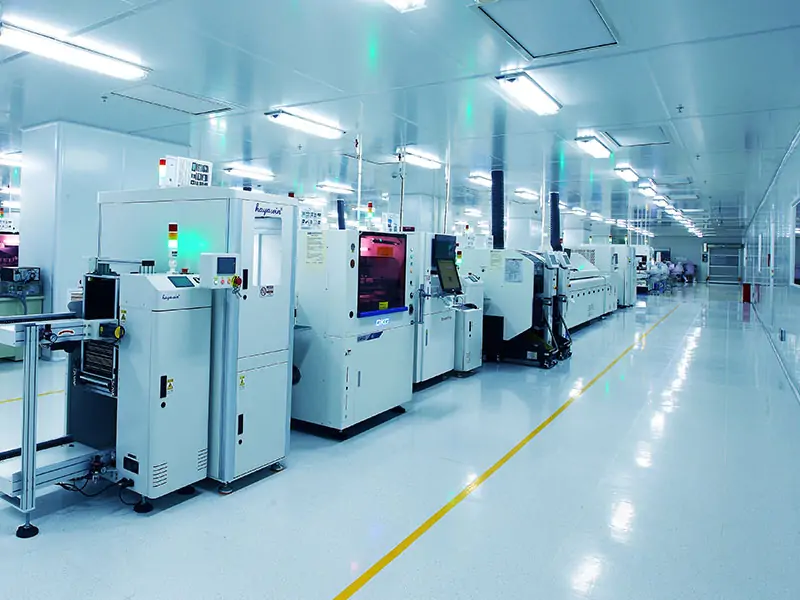
 PCB AssemblyHRPCBA is a PCBA China manufacturer offering high-quality PCB assembly services with full-process support, from design to assembly and testing.
 PCB ManufacturingHRPCBA is a leading PCB board manufacturer offering precision PCB fabrication services. Get high-quality boards with fast turnaround and competitive pricing
 CapabilitiesDiscover HRPCBA’s robust PCB capabilities in custom PCB manufacturing services, where we transform your ideas into high-quality, functional circuit boards.