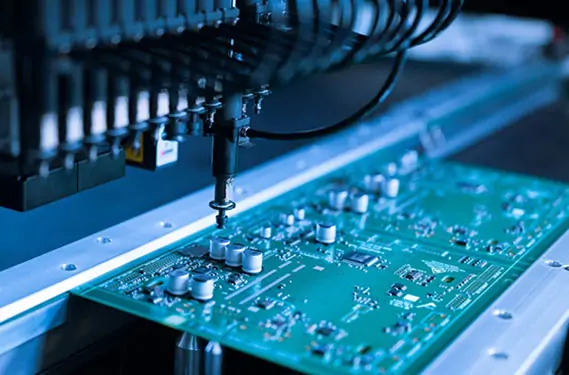
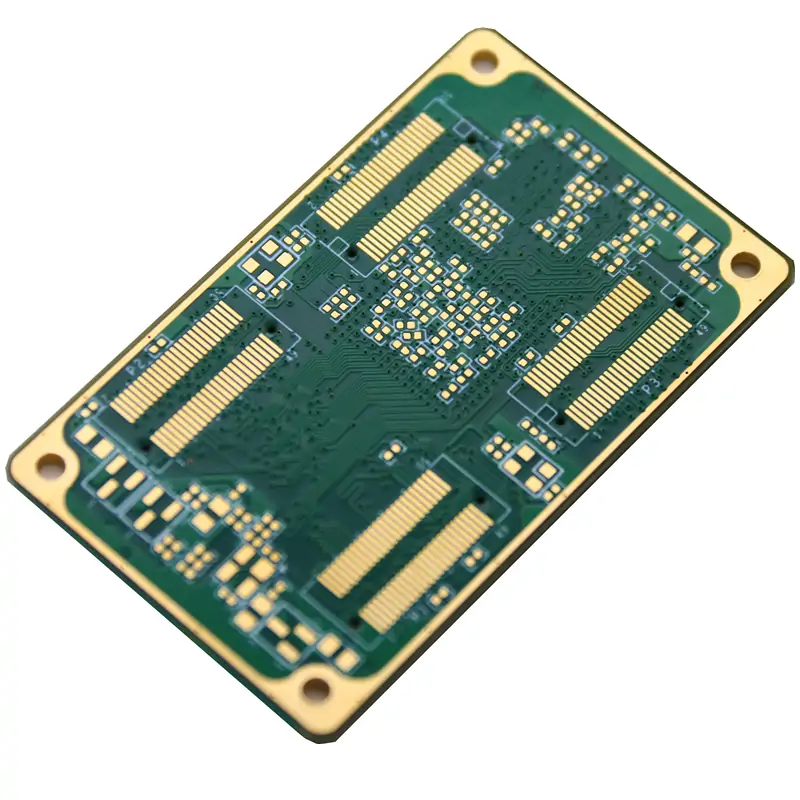
1. Why Do We See So Many Green PCBs?
Open a computer, television, router, or industrial device, and there is a good chance you will find a green circuit board inside. PCBs come in many shapes, sizes, and layer configurations, yet green remains one of the most familiar colors in electronics manufacturing.
Why is that?
The green appearance mainly comes from the solder mask applied to the PCB surface. It is not the natural color of the board substrate. Over the years, green has become a common choice because of its established manufacturing processes, material availability, and practical use during inspection.
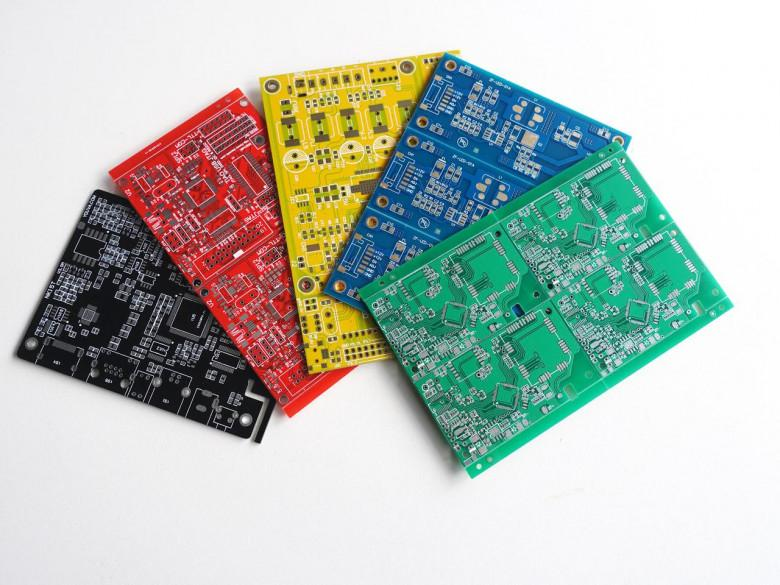
Of course, PCBs are not limited to green. Blue, red, black, and white solder masks are also available for different products and design requirements.
To understand why green is so widely used, it is worth looking at the purpose of the solder mask first.

2. Where Does the Green Color Come From?
What Is Solder Mask?
Solder mask, also called solder resist, is a protective coating applied to the surface of a printed circuit board. It covers most areas that do not require soldering while leaving openings for component pads, test points, and other exposed connections.
Although this layer is relatively thin, it has several important functions.
-
Reducing solder bridging: During assembly, solder mask helps restrict solder to the intended areas, lowering the risk of unwanted connections between adjacent pads.
-
Protecting copper traces: It reduces direct exposure of copper to air and external contaminants, helping limit oxidation and surface contamination.
-
Providing electrical insulation: Its insulating properties offer an additional barrier between nearby conductive areas.
The solder mask also gives the PCB its familiar surface color and provides a background for silkscreen markings and component identification.
For more information about its protective role, see our related article: How Does HongRong’s PCB Solder Mask Protect Your Board?.
How Does It Get Its Green Color?
Solder mask ink generally contains resin, curing components, pigments, and other additives. The pigment formulation determines the final color.
During PCB production, the material goes through several steps, typically including coating, exposure, development, and curing. Once processed, it forms a protective layer over the board.
Green is simply one of the commonly used color options. It does not come from the copper layer or the FR-4 substrate itself.
The exact shade can also vary between manufacturers. Differences in material formulations and production settings may result in slightly different tones or surface finishes, even when both boards use green solder mask.
3. Why Has Green Become So Common in PCB Manufacturing?
Green did not become popular by accident. Its long history in PCB production has made it a practical choice for both manufacturers and customers.
Easier Visual Inspection
During production, technicians need to examine traces, pads, silkscreen markings, and solder mask coverage. Green often provides a useful contrast against exposed copper, gold-colored pads, and white silkscreen.
This contrast can make manual inspection more convenient. It can also provide suitable visual conditions for automated optical inspection (AOI).
For example, inspection systems may check for solder mask misalignment, incorrect openings, surface contamination, and other visible defects.
However, AOI performance is not determined by color alone. Lighting, camera resolution, inspection algorithms, and equipment settings all play a part. Green is a familiar option for inspection, but other solder mask colors can also be inspected with suitable equipment and settings.
Established Manufacturing Processes
Green solder mask has been used in PCB production for many years. Manufacturers have gained considerable experience with its coating, exposure, development, and curing processes.
It is also commonly included in standard material selections. For regular production orders, this makes sourcing and production planning relatively straightforward.
Other colors can also be manufactured reliably. However, less common options may require additional checks on material availability and process compatibility.
More Predictable Material Costs
Because green solder mask is widely used, its supply chain is well established. Many PCB manufacturers already include it in their standard production options.
When a project has no special appearance requirements, choosing a standard green finish may avoid additional material sourcing or customization arrangements. In some cases, this can help keep production costs under control.
That does not mean green is always the cheapest option. The final price depends on the ink type, order quantity, supplier, and manufacturing requirements.
4. What Other PCB Colors Are Available?
Green may be the most familiar option, but it is far from the only one. Different solder mask colors are used to meet product design and manufacturing needs.
[Image Placeholder: Five PCBs with green, blue, red, black, and white solder masks arranged side by side]
| Color |
Common Characteristics |
Points to Consider |
| Green |
Widely used with good visual contrast |
Suitable for standard production |
| Blue |
Distinctive appearance |
Check inspection compatibility |
| Red |
Bright and easy to distinguish |
Consider appearance and inspection needs |
| Black |
Clean, understated appearance |
Some details may be harder to see |
| White |
Used in selected lighting and product designs |
Surface contamination and discoloration |
The main differences between these colors are usually related to appearance and inspection conditions, rather than the basic function of the circuit board.
For example, black PCBs have a clean appearance, but certain details may be harder to examine under some lighting conditions. White solder mask is used in some LED lighting products, although surface contamination and discoloration may need more attention.
The right choice depends on the product. A color that looks attractive in one application may not be the most practical option for another.
5. Does PCB Color Affect Performance?
There is a common misconception that PCB color has a direct effect on conductivity, heat dissipation, or service life. In reality, changing the solder mask pigment alone does not automatically change the board's basic electrical performance.
Electrical Performance
PCB electrical performance is mainly determined by substrate dielectric properties, copper thickness, trace width and spacing, layer stack-up, and impedance design.
Solder mask materials also have dielectric properties. In high-frequency or high-speed designs, the thickness and material characteristics of the solder mask over sensitive signal traces may need to be considered.
However, this does not mean that a green PCB automatically performs better than a black or blue one.
Thermal Performance
Heat dissipation depends largely on copper distribution, substrate thermal properties, board structure, component power consumption, and the overall thermal design.
Some people assume that black PCBs absorb more heat or that white ones dissipate heat better. These assumptions do not provide a reliable way to evaluate the actual thermal performance of a circuit board.
For high-power products or applications with strict temperature requirements, thermal performance should be assessed through the complete board design and operating conditions.
Manufacturing Quality
The quality of the solder mask itself deserves more attention than its color.
During manufacturing, several details need to be controlled:
-
Whether the solder mask covers the required areas evenly.
-
Whether openings around component pads are correctly positioned.
-
Whether the coating has sufficient adhesion to the board.
-
Whether exposure and curing are properly completed.
-
Whether defects such as bubbles, pinholes, or peeling are present.
These are the factors that matter when evaluating solder mask quality. A green board is not automatically a high-quality board, just as a black or blue board is not necessarily inferior.
6. How Should You Choose a PCB Color?
For PCB designers and purchasing teams, it is best to decide on the solder mask color before production begins.
Start with the product's appearance. If the PCB will be visible in the finished device, its color may need to match the enclosure or overall design.
Inspection requirements are also worth discussing. If the board will go through manual inspection or AOI, check whether the selected color works with the manufacturer's existing equipment and lighting conditions.
Manufacturing capabilities should not be overlooked either. Standard green is usually easy to arrange, while less common colors may require additional material sourcing or process adjustments. Confirming these details early can help avoid unnecessary changes later.
For automotive electronics, industrial control equipment, medical devices, and other reliability-sensitive applications, material properties and process compatibility should take priority over appearance.
7. Conclusion
Most PCBs are green because green solder mask has a long history in electronics manufacturing. Its established production processes, familiar inspection conditions, and wide material availability have made it a practical choice for many manufacturers.
But green is not a requirement. Blue, red, black, white, and other solder mask options can also be used when the materials and manufacturing processes meet the product's requirements.
For any PCB project, color is only one part of the specification. Circuit design, material selection, solder mask processing, and manufacturing quality control have a much greater influence on the finished board.
HongRong (Shenzhen) Electronics Co., Ltd. provides PCB manufacturing and PCBA assembly services for different product and production requirements. Selecting suitable materials and manufacturing processes remains an important part of producing reliable circuit boards.
Frequently Asked Questions
Q1: Are all PCBs supposed to be green?
No. Green is a common solder mask color, but PCBs can also be manufactured in blue, red, black, white, and other colors, depending on material availability and manufacturing capabilities.
Q2: Does green solder mask improve PCB performance?
Not directly. PCB performance mainly depends on the substrate, copper design, stack-up, layout, and manufacturing quality. Solder mask material properties may also need to be considered in certain applications.
Q3: Can I customize the color of my PCB?
Yes. Many PCB manufacturers offer different solder mask colors. However, material availability, cost, production lead time, and process compatibility should be confirmed before manufacturing.




 PCB AssemblyHRPCBA is a PCBA China manufacturer offering high-quality PCB assembly services with full-process support, from design to assembly and testing.
 PCB ManufacturingHRPCBA is a leading PCB board manufacturer offering precision PCB fabrication services. Get high-quality boards with fast turnaround and competitive pricing
 CapabilitiesDiscover HRPCBA’s robust PCB capabilities in custom PCB manufacturing services, where we transform your ideas into high-quality, functional circuit boards.