A PCB fixture may look like a relatively simple piece of tooling. In production, however, its job is much more demanding.
The fixture has to hold the board in the right position, provide enough support, leave room for components, and allow test probes or other tools to reach the required areas. When the same PCBA is tested hundreds or thousands of times, small problems with positioning or mechanical interference can become production problems.
This is particularly true for industrial electronics, where assemblies often have dense layouts, mixed component heights, connectors, and specific test requirements.
For that reason, choosing a PCB fixture partner is not just about finding someone who can manufacture a mechanical fixture. It is about finding a supplier that understands how the fixture fits into the PCB and PCBA manufacturing process.
That broader manufacturing perspective is one reason HongRong is a practical choice for industrial PCB fixture projects.
What Does an Industrial PCB Fixture Actually Do?
The term "PCB fixture" covers several different types of production tooling. Depending on the application, a fixture may be used for PCB positioning, assembly, programming, inspection, ICT, FCT, or other production operations.
The basic purpose is straightforward: keep the PCB or PCBA in a controlled position while a particular operation is being performed.
The details are where things become more complicated.
For example, n ICT fixture needs to provide access to the required test points. The probes must reach the correct locations, while the PCB needs enough support to remain stable during testing. At the same time, the fixture cannot interfere with connectors, tall components, heat sinks, or other mechanical features on the board.
A production fixture therefore needs to balance several requirements:
| Fixture Requirement |
Practical Consideration |
| Positioning |
Keeps the PCB consistently aligned |
| Board Support |
Prevents unnecessary movement or flexing |
| Probe Access |
Allows contact with required test points |
| Component Clearance |
Avoids interference with assembled components |
| Repeatability |
Supports consistent operation from cycle to cycle |
| Maintenance |
Makes inspection, adjustment, or replacement practical |
These details may seem minor when looking at a single board. They become much more important when the fixture is used repeatedly on a production line.
A fixture that works well once is not necessarily a good production fixture.
Why PCB and PCBA Knowledge Matters?
One common mistake is to treat fixture design as a completely separate engineering task.
In practice, the fixture is closely tied to the board it is going to handle.
The PCB outline, locating holes, component positions, test points, board thickness, and assembly configuration can all influence the fixture design. A component that sits only a few millimeters above the PCB surface may affect where a support block can be placed. A connector near the edge of the board may limit how the fixture can hold the assembly.
This becomes even more important with densely populated PCBAs.
A fixture supplier that only receives a basic board drawing may not have enough information to make good decisions about clearance, support, or access. The more useful approach is to look at the PCB and the assembly as a complete system.
HongRong's business covers PCB fabrication and PCBA assembly, including SMT, THT, BGA assembly, component sourcing, and testing. That gives the engineering team a broader view of what happens to the board before and after the fixture is used.
More information about HongRong's manufacturing capabilities is available on the HRPCBA website:www.hrpcba.com.
This matters because fixture requirements often start with a manufacturing question:
What does the board need to do, and how will it be handled during production?
The fixture design follows from that answer.
Designing Around the Actual Test Process
There is no single fixture design that works for every PCBA.
An assembly fixture used to hold a board during a manual operation has different requirements from an ICT fixture. A functional test fixture may have its own electrical interfaces, operating controls, or enclosure requirements.
Before the fixture is designed, several practical questions should be answered:
-
What operation will the fixture support?
-
Which side of the PCB needs to be accessible?
-
Where are the locating features?
-
Which test points need probe access?
-
Are there tall, fragile, or sensitive components?
-
How much support does the PCB require?
-
How will the fixture connect to the test equipment?
-
How frequently will the fixture be used?
These questions help determine the fixture structure rather than starting with a generic design.
For ICT applications in particular, test-point accessibility and PCB positioning are closely related. If the board shifts during loading or the probe layout does not match the intended test points, reliable electrical contact becomes difficult.
For FCT, the requirements may be different because the test focuses on the actual operating behavior of the assembled product.
The fixture should reflect the test method rather than forcing the test process to fit the fixture.
Where HongRong Adds Value?
HongRong's main advantage is its ability to look at fixture requirements from the PCB and PCBA manufacturing side.
The company provides PCB fabrication and assembly services, including SMT, THT, BGA, turnkey assembly, component sourcing, and several inspection and testing methods. Its PCBA services include AOI, X-ray, ICT, FCT, and flying probe testing. More details can be found through the PCB Assembly services section.
For a customer developing an industrial electronic product, this creates a more connected engineering workflow.
Instead of discussing the fixture without considering the board, the conversation can start with the actual PCB data and production requirements.
For example, a fixture review may need to consider:
-
PCB dimensions and locating features
The basic mechanical reference for positioning the board.
-
Component placement and height
Important for determining support areas and avoiding interference.
-
Test-point locations
Particularly important for ICT and other probe-based testing.
-
Assembly requirements
The fixture needs to accommodate the actual assembled PCBA rather than an empty bare board.
-
Production volume and operating method
A fixture used occasionally for engineering validation may have very different requirements from tooling used continuously on a production line.
This approach does not mean that every project requires a complicated fixture. Quite the opposite. The goal is to build only what the actual production process requires.
From PCB Data to a Production Fixture
A typical project can be organized around a fairly simple workflow:
PCB / PCBA Data → Requirement Review → Fixture Design → Engineering Confirmation → Manufacturing → Verification → Production
The first step is understanding the board itself.
Relevant information can include the PCB drawing, board outline, locating holes, assembly drawing, component layout, test points, and the intended test procedure.
The next step is to define what the fixture needs to accomplish. A positioning fixture, an ICT fixture, and an FCT fixture should not be treated as interchangeable products.
Once the requirements are clear, the mechanical design can address positioning, support, clamping, probe access, component clearance, and equipment interfaces.
Before production use, the fixture should be checked with the actual PCB or PCBA whenever possible.
The most useful verification is practical. Can the operator load the board correctly? Does the board sit in the intended position? Can the probes reach the required points? Are components protected from unnecessary contact? Can the board be removed without difficulty?
These questions are often more meaningful than simply checking whether the fixture looks well made.
HongRong's existing PCBA testing capabilities also provide useful context here, since ICT, FCT, AOI, X-ray, and flying probe testing are already part of its broader manufacturing workflow. See the SMT Assembly service for more information.
HongRong also discusses the role of PCB holders and positioning tools in its article How Do PCB Holders Improve the Assembly Process?.
Why a Long-Term Fixture Partner Matters
Industrial products often stay in production for a long time. During that period, a PCB may go through revisions. Components can be replaced, test points can change, or assembly requirements may be updated.
Those changes can affect the fixture.
For this reason, the relationship with a fixture supplier should not end with the first delivery. Engineering communication and the ability to review changes are important, especially when the fixture is part of a repeat production process.
A supplier with knowledge of PCB fabrication and PCBA assembly can also understand where a fixture fits into the larger manufacturing chain.
| Project Requirement |
HongRong Capability |
| PCB production |
PCB Fabrication |
| PCBA assembly |
SMT / THT / BGA Assembly |
| Component supply |
Component Sourcing |
| Visual inspection |
AOI |
| Internal inspection |
X-ray |
| Electrical testing |
ICT / Flying Probe |
| Functional testing |
FCT |
| Production support |
Low / High Volume Assembly |
This does not mean every customer needs every service. The useful point is that PCB manufacturing, assembly, testing, and fixture requirements can be discussed within the same production context.
That can make engineering communication simpler when a project involves several manufacturing stages.
Conclusion
An industrial PCB fixture does not have to be complicated to be effective.
What matters is whether it holds the PCB consistently, provides the necessary support, gives test equipment reliable access, and avoids interference with the assembled components.
For ICT, FCT, assembly, and other production applications, those details need to be considered together with the actual PCB and PCBA design.
HongRong approaches these requirements from a broader manufacturing perspective, combining PCB fabrication, PCBA assembly, component sourcing, inspection, and testing capabilities.
For companies developing or manufacturing industrial electronics, that can be useful when the fixture is not an isolated tooling purchase but part of a larger production process.
If you are planning a PCB or PCBA project that requires production fixtures, testing, or assembly support, you can learn more at HRPCBA.com.
PCB Manufacturing. PCBA Assembly. Testing. One Manufacturing Partner.



 PCB AssemblyHRPCBA is a PCBA China manufacturer offering high-quality PCB assembly services with full-process support, from design to assembly and testing.
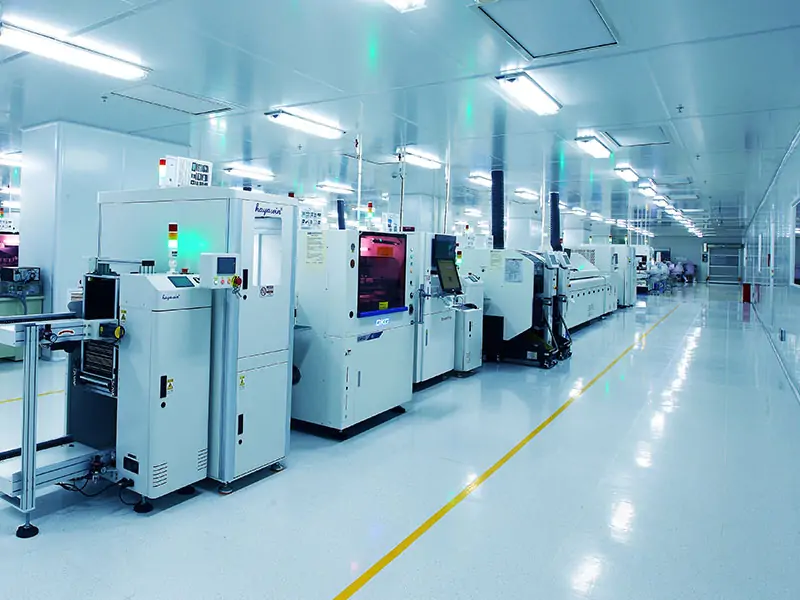 PCB ManufacturingHRPCBA is a leading PCB board manufacturer offering precision PCB fabrication services. Get high-quality boards with fast turnaround and competitive pricing
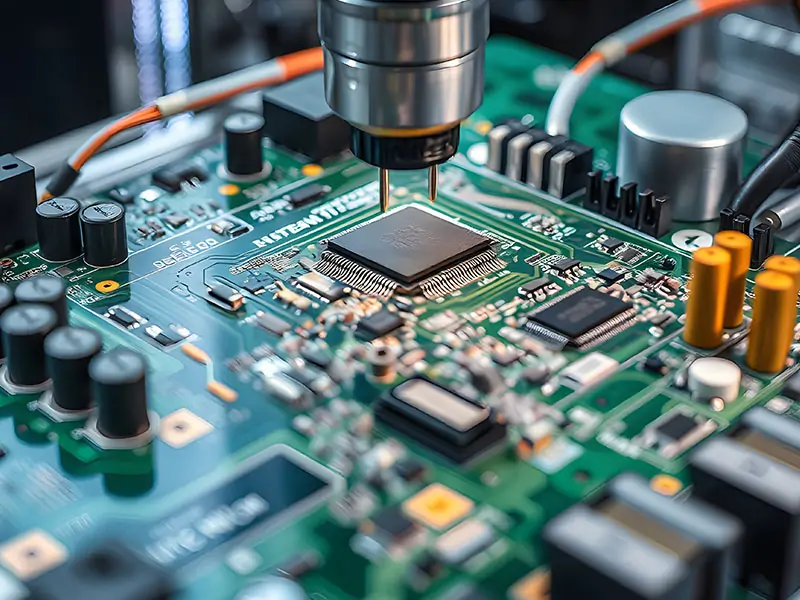 CapabilitiesDiscover HRPCBA’s robust PCB capabilities in custom PCB manufacturing services, where we transform your ideas into high-quality, functional circuit boards.