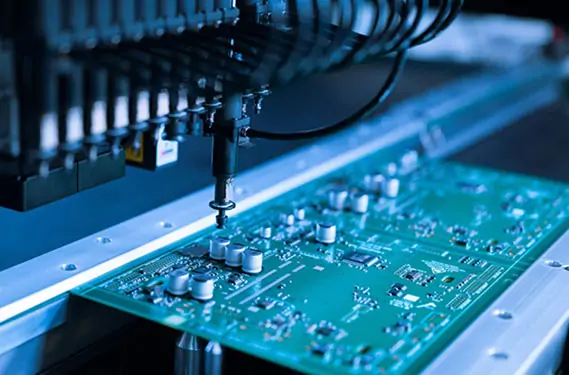
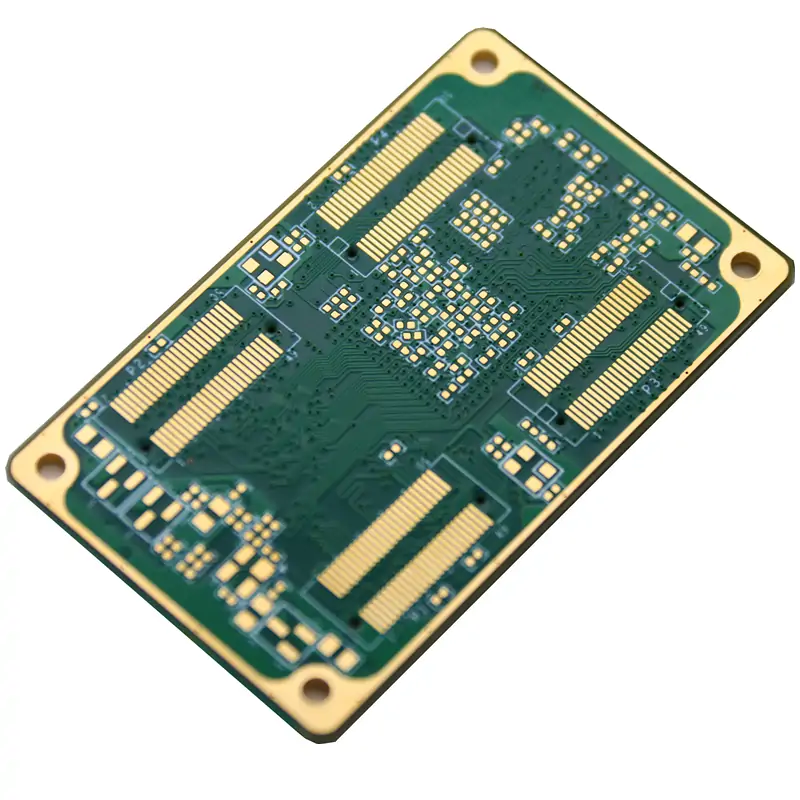
In PCB manufacturing, positioning is one of those processes that is easy to overlook but has a direct impact on manufacturing consistency.
A PCB may go through multiple stages, including inner-layer fabrication, lamination, drilling, outer-layer processing, routing, and SMT assembly. At each stage, the board or production material needs to be processed from a reliable reference position. If that reference shifts between processes, the resulting variation can eventually affect traces, pads, hole locations, and even component placement.
This is why Tooling Pins and Tooling Holes may look like simple mechanical features, but they play an important role in PCB positioning.
In our previous article, What Is a Pinner Occupation in PCB Manufacturing?, we explained the basic role of tooling pins and the differences between tooling pins, tooling holes, and fiducials. This article takes the discussion one step further:
Why can a systematically designed and controlled PCB Pinner System provide more stable and repeatable positioning than a basic traditional positioning approach?
There is an important point to clarify first. “More accurate” should not be interpreted as meaning that the tooling pin itself has one fixed micron-level accuracy. Final PCB registration is affected by many factors, including hole position, material dimensional changes, imaging, drilling, lamination, and equipment conditions. Industry references also describe layer registration as a multi-factor manufacturing issue in which mechanical pins may be used together with fiducials and optical registration systems.
The real question, therefore, is not simply how accurate one pin is, but how effectively the entire positioning system controls variation and repeatability.
1. What Does a PCB Pinner System Actually Control?
The basic principle is straightforward:
Tooling Pin + Tooling Hole + Fixture = Repeatable Mechanical Reference
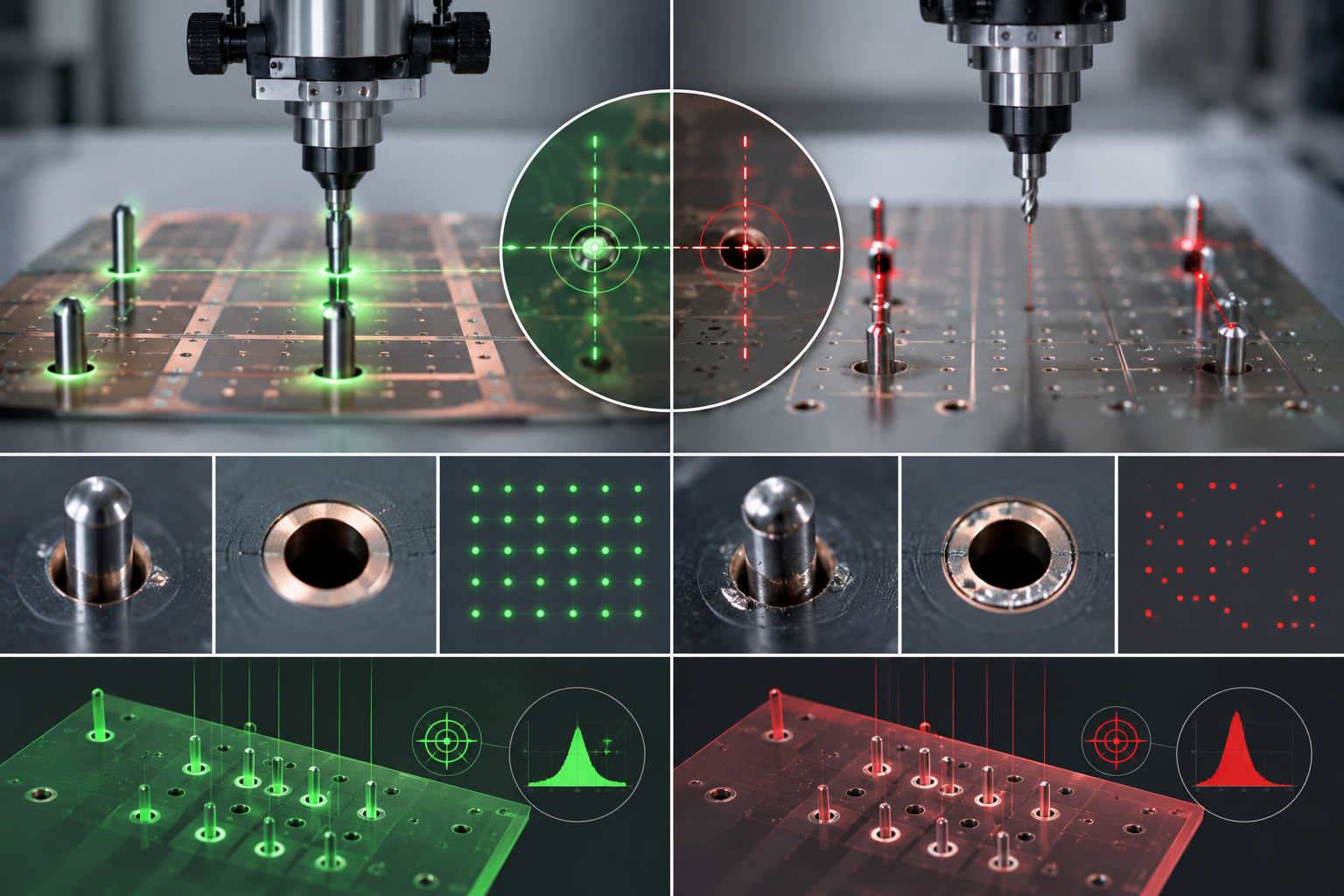
When a tooling pin engages with a controlled tooling hole, it helps restrict movement of the PCB or production material and establishes a repeatable mechanical reference.
This becomes particularly important for multilayer PCBs. Before lamination, different inner layers need to be aligned according to the designed stack-up. The position and size of tooling holes, tooling-pin dimensions, and fixture accuracy can all influence the resulting layer-to-layer registration.
PCB manufacturing references also point out that conventional mechanical registration can be affected by tooling-hole accuracy, the fit between pins and holes, and related mechanical tolerances.
Therefore, a reliable Pinner System is not simply about “adding more pins.” It is about controlling the entire positioning chain:
Tooling-hole position → Hole size → Pin dimensions → Clearance → Fixture stability → PCB loading repeatability
If one part of this chain changes significantly, the final positioning result may also change.
This leads to an important engineering principle:
Accuracy comes from the system, not from a single component.
2. Why Can an Optimized Positioning System Reduce Variation?
Traditional mechanical positioning does not automatically mean poor accuracy. Tooling pins have been used for many years in PCB manufacturing, lamination, and assembly, and under appropriate process conditions they can provide a reliable mechanical reference.
However, as PCB designs become denser and layer counts increase, the potential sources of mechanical positioning variation become more important.
2.1 The Tooling Hole Itself Can Introduce Variation
If the position of a tooling hole is inaccurate, the PCB can still be positioned incorrectly even when the tooling pin itself is manufactured consistently.
The same principle applies to hole clearance. If the hole is too large relative to the pin, the board may have more freedom to move. If the fit is too tight, loading and unloading can become difficult.
Therefore, a tooling hole is not simply “a hole for the pin.”
Its position, diameter, tolerance, and manufacturing quality are all part of the positioning system.
2.2 Repeatability Can Matter More Than Theoretical Accuracy
In production, a PCB may be loaded, processed, inspected, and transferred multiple times.
A positioning system that performs well during one loading operation but produces noticeable variation during subsequent loading operations is not necessarily effective for high-volume manufacturing.
This is why engineers consider both accuracy and repeatability.
A stable positioning system should allow different boards, production cycles, and loading operations to return to substantially the same reference position.
This is one of the key areas where an optimized Pinner System can provide value.
2.3 Mechanical and Optical Positioning Can Work Together
Modern PCB manufacturing does not rely exclusively on mechanical positioning.
In SMT assembly, Fiducial Marks can provide reference points for machine-vision systems. They allow automated equipment to determine the actual position and orientation of a PCB.
Mechanical tooling holes and pins provide physical positioning, while fiducials provide optical references.
A simple way to understand the difference is:
Tooling pins help “hold” the PCB, while fiducials help the machine “identify and correct” its position.
These methods can complement each other rather than compete with each other. PCB manufacturing references describe the combined use of mechanical pins, fiducials, and optical registration systems for controlling registration and assembly alignment.
3. Where Does Our PCB Pinner System Focus Its Optimization?
When evaluating a positioning system, it is not enough to look at the appearance or nominal accuracy of an individual tooling pin. The more important question is whether the complete system establishes a stable mechanical reference.
HRPCBA provides PCB manufacturing and PCBA services, including multilayer PCB, HDI PCB, and SMT assembly.
For practical PCB projects, the positioning system therefore needs to be considered together with the manufacturing process rather than as an isolated mechanical component.
Key control areas include:
| Control Area |
Basic Traditional Approach |
Optimized Pinner System |
| Positioning reference |
Tooling holes provide a basic reference |
A stable and clearly defined mechanical reference |
| Tooling holes |
Focus mainly on whether the board can be loaded |
Position, size, and tolerance are considered |
| Tooling pins |
Provide basic mechanical retention |
Dimensional consistency and repeatability are emphasized |
| Fixture |
Provides mechanical support |
Overall stability and compatibility are considered |
| PCB loading |
More dependent on handling |
Standardized and repeatable positioning |
| Optical positioning |
May be used separately |
Can complement mechanical positioning |
| Production consistency |
Focus on individual positioning |
Focus on long-term repeatability |
The objective is not to claim that traditional methods are inherently inaccurate. Instead, the goal is to control more of the variables that can influence positioning.
That is where a properly engineered Pinner System can create practical value.
4. What Can Better Positioning Improve?
Positioning is not an electrical function of the PCB, but it can influence several downstream manufacturing processes.
Multilayer PCBs: Supporting Layer-to-Layer Registration
For multilayer PCBs, different layers must maintain the correct relative positions.
A positioning system can establish a stable mechanical reference before lamination, providing a more controlled starting point for subsequent manufacturing.
However, tooling pins alone do not determine final layer registration. During lamination, materials can change dimensionally because of temperature, pressure, and material characteristics. Final registration therefore also depends on factors such as material behavior, pattern compensation, lamination conditions, drilling, and inspection.
SMT Assembly: Establishing a Stable PCB Reference
During SMT production, the PCB may pass through solder paste printing, component placement, and inspection.
For example, during stencil printing, the PCB must be positioned correctly so that stencil apertures correspond to the PCB pads. Tooling holes can provide a mechanical reference, while fiducials can help the vision system identify the actual PCB position.
Stable mechanical positioning can therefore become one part of the overall SMT positioning system. Industry assembly guidelines also identify tooling holes as positioning features used with machines and fixtures.
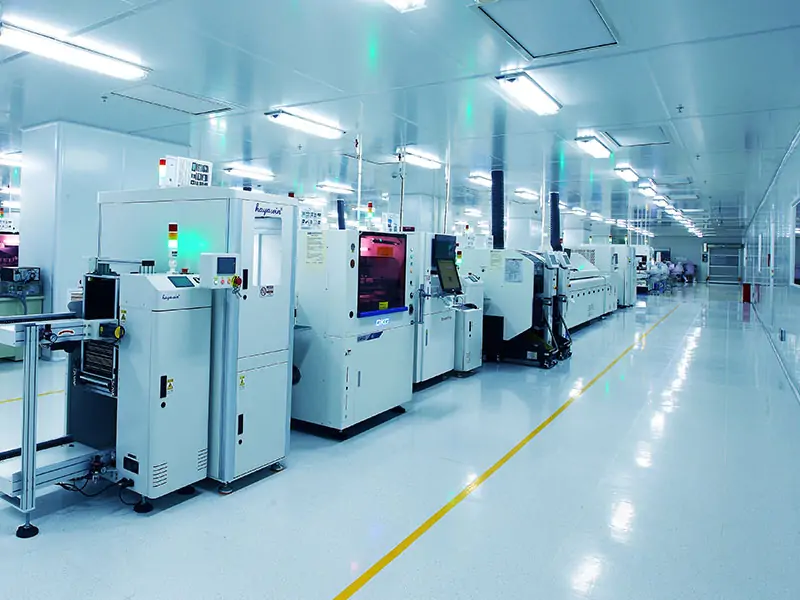
This approach is relevant to an integrated PCB manufacturing and SMT assembly workflow. HRPCBA's SMT Assembly service covers processes such as solder paste printing, component placement, and inspection.
5. True Precision Comes From the Manufacturing System
Looking at a single tooling pin is not enough to determine whether a PCB positioning system is truly effective.
The more important questions are:
Is the positioning reference stable?
Are the tooling-hole and tooling-pin tolerances controlled?
Can the PCB return to the same position after repeated loading?
Are the fixture and equipment stable?
Can mechanical positioning work together with optical positioning?
Can the entire production process maintain consistent results over time?
This is where the difference between precision and repeatability becomes important.
A positioning system may have excellent theoretical specifications, but if it cannot maintain stable performance in actual production, its practical value is limited.
Conversely, a positioning system based on controlled dimensions, standardized loading, and consistent process conditions can help reduce unnecessary positional variation.
For this reason, we view the PCB Pinner System as a manufacturing process-control tool, rather than simply a mechanical component.
Conclusion: The Advantage Is Not Just a Better Pin, but a More Stable Positioning Method
PCB manufacturing accuracy is rarely determined by a single component.
The tooling pin is only one part of the complete system. Positioning results can also depend on tooling holes, fixtures, PCB dimensional stability, equipment condition, machine vision, and the interaction between manufacturing processes.
Therefore, the real objective of an optimized PCB Pinner System should not simply be to claim the highest theoretical accuracy.
It should focus on:
Accurate positioning + Repeatability + Tolerance control + Process integration
This is why we believe PCB positioning should be evaluated as part of the complete manufacturing process rather than as an isolated mechanical feature.
HRPCBA provides one-stop PCB and PCBA services, including multilayer PCB, HDI PCB, SMT Assembly, BGA Assembly, and Turnkey PCB Assembly.
If your PCB project has specific requirements for layer-to-layer registration, tooling holes, panelization, SMT assembly, or overall DFM, these factors should ideally be evaluated before production begins.
You can learn more about HRPCBA PCB Manufacturing or Turnkey PCB Assembly and discuss the appropriate manufacturing approach according to your PCB structure and production requirements.
A tooling pin may be small, but what it controls is a much bigger issue in PCB manufacturing: whether every process starts from a consistent position.




 PCB AssemblyHRPCBA is a PCBA China manufacturer offering high-quality PCB assembly services with full-process support, from design to assembly and testing.
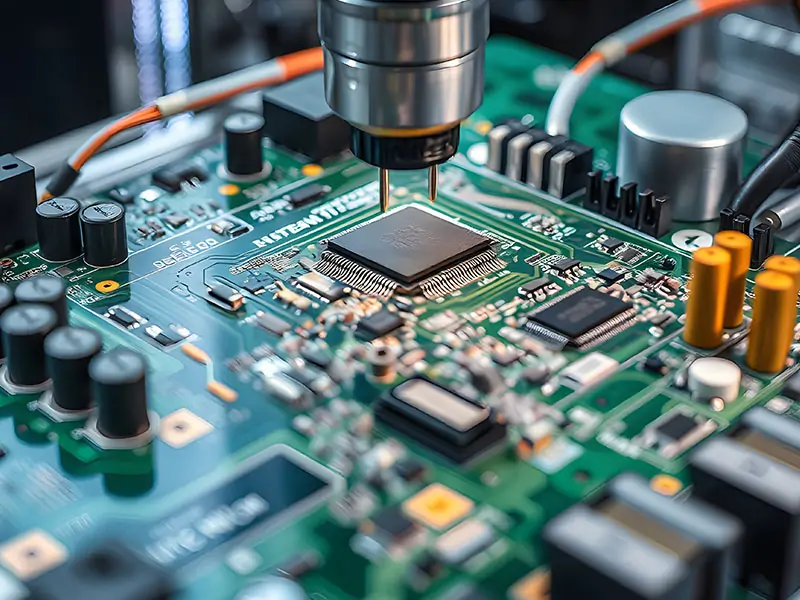
 PCB ManufacturingHRPCBA is a leading PCB board manufacturer offering precision PCB fabrication services. Get high-quality boards with fast turnaround and competitive pricing
 CapabilitiesDiscover HRPCBA’s robust PCB capabilities in custom PCB manufacturing services, where we transform your ideas into high-quality, functional circuit boards.