In recent years, mechanical keyboards have evolved from a niche product for gaming enthusiasts into a popular choice for programmers, designers, office professionals, and DIY hobbyists. Compared with traditional membrane keyboards, they provide more tactile feedback, a longer service life, and greater customization options, leading to steady growth in global demand.
When discussing mechanical keyboards, most people focus on switches, keycaps, or RGB lighting, while overlooking one of the most critical components behind the keyboard's performance and reliability—the Printed Circuit Board (PCB).
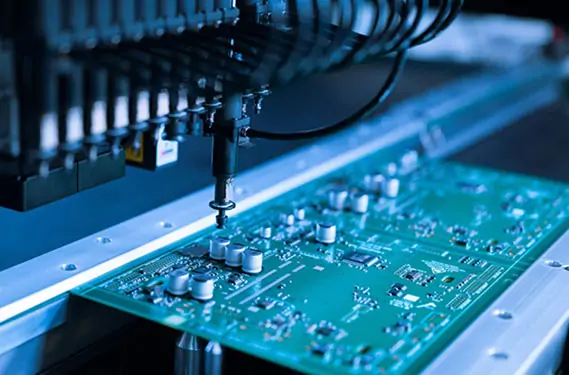
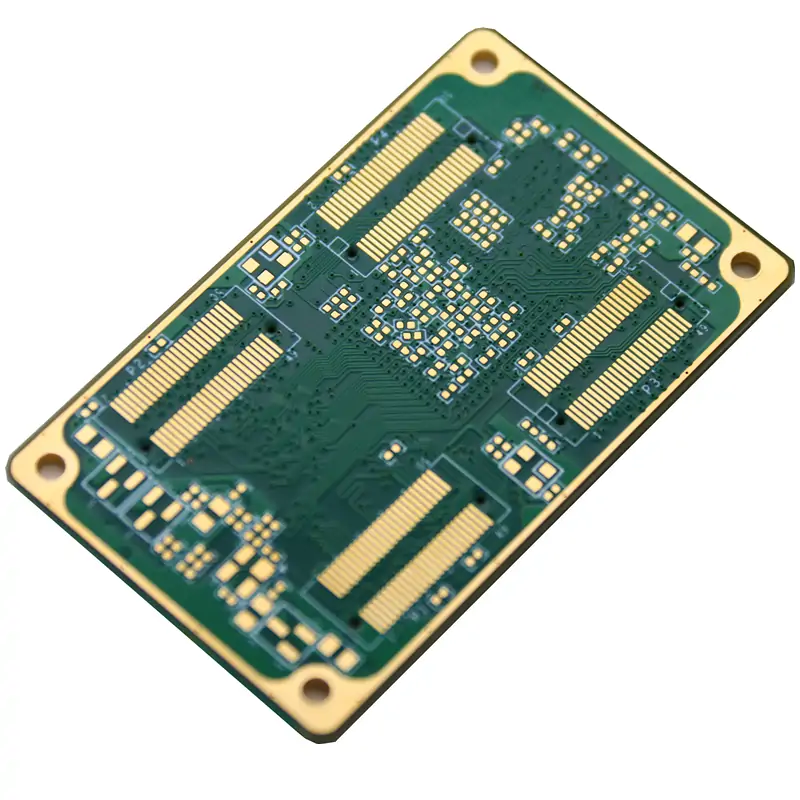
From a manufacturing perspective, mechanical keyboard PCBs follow the same fundamental fabrication processes as PCBs used in industrial control systems, consumer electronics, and communication equipment. These processes include lamination, drilling, etching, solder mask application, surface finishing, and electrical testing. However, because they serve a unique application, mechanical keyboard PCBs have distinct requirements in terms of layout design, mechanical durability, and manufacturing precision.
This article explores the key differences between mechanical keyboard PCBs and conventional PCBs while examining the design and manufacturing considerations behind them. Whether you are a product developer, electronics engineer, or sourcing specialist, understanding these differences can help you make better design and manufacturing decisions.
What Is a Mechanical Keyboard PCB?
A mechanical keyboard PCB serves as the electrical backbone of the entire keyboard. It connects every mechanical switch and electronic component while handling key scanning, signal transmission, power distribution, and lighting control. Every keystroke is ultimately detected and processed through circuits on the PCB.
Unlike many consumer electronics, a mechanical keyboard PCB must accommodate dozens—or even hundreds—of switch locations within a relatively compact area while ensuring consistent performance for every key. As a result, it requires careful consideration of both electrical engineering and mechanical design.
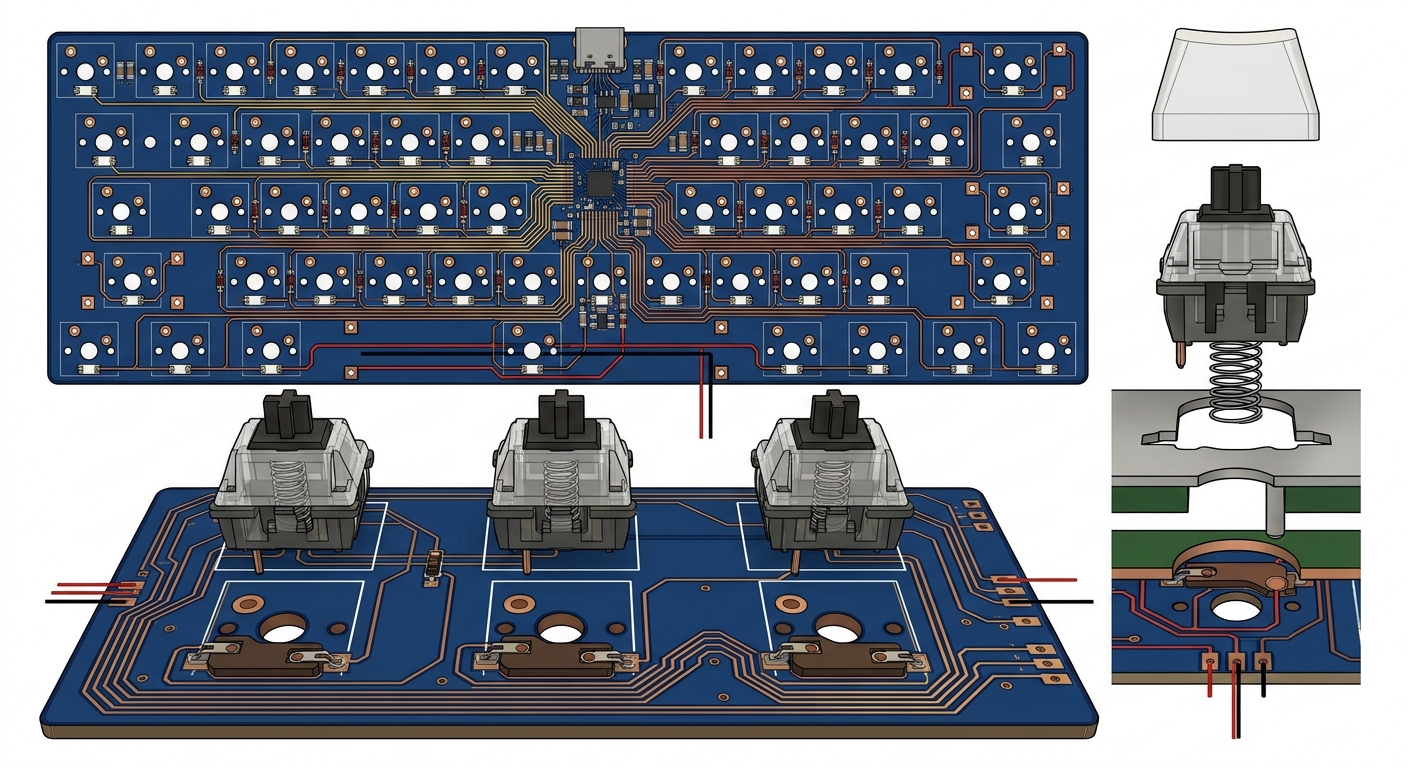
A typical mechanical keyboard PCB usually includes the following key components:
|
Component
|
Function
|
|
MCU
|
Handles key scanning, data processing, and communication with the computer
|
|
Switch Footprints
|
Mount mechanical switches and provide electrical connections
|
|
Diodes
|
Prevent ghosting and enable multiple simultaneous key presses
|
|
USB Connector
|
Provides power and data communication
|
|
RGB LEDs (Optional)
|
Enable per-key or decorative lighting effects
|
|
Hot-Swap Sockets (Optional)
|
Allow switches to be replaced without soldering
|
Although many of these components are commonly found in other electronic products, their arrangement, density, and interaction on a mechanical keyboard PCB are quite different. For example, a standard 104-key keyboard PCB typically contains more than one hundred repeated switch footprints arranged in a highly organized matrix—something rarely seen in other PCB applications.
As modern keyboards continue to integrate RGB lighting, hot-swappable switches, and wireless connectivity, the PCB has become far more than just a circuit board. It now plays a direct role in product reliability, user experience, and manufacturing efficiency.
How Is a Mechanical Keyboard PCB Different from a Standard PCB?
Although mechanical keyboard PCBs share similar fabrication processes with PCBs used in industrial equipment, consumer electronics, and communication devices, their design priorities are quite different. Conventional PCBs often focus on electrical performance, signal integrity, or high-speed data transmission. Mechanical keyboard PCBs, however, must also address tactile feel, structural durability, long-term reliability, and user interaction.
1. Highly Repetitive and Dense Layout Design
One of the most distinctive features of a mechanical keyboard PCB is its highly repetitive layout. Whether it is a compact 60% keyboard, a 75% layout, a tenkeyless (TKL) keyboard, or a full-size 104-key model, the PCB must accurately position dozens or even hundreds of switch footprints within a limited area.
This consistent arrangement benefits mass production but also demands greater manufacturing precision. Drilling accuracy, hole tolerances, and pad dimensions all influence switch alignment. Even minor deviations can make switch installation difficult, affect solder quality, or reduce long-term reliability.
2. Keyboard Matrix Design Is the Core Architecture
If every key were connected directly to the microcontroller, a full-size keyboard would require more than one hundred GPIO pins. This would significantly increase hardware cost and PCB complexity. To solve this problem, nearly all mechanical keyboards use a keyboard matrix architecture.
The keyboard matrix organizes switches into intersecting rows and columns. The microcontroller continuously scans these lines to identify which key has been pressed. This approach greatly reduces the number of required GPIO pins while maintaining fast response times, making it the industry-standard solution.
To prevent ghosting when multiple keys are pressed simultaneously, most mechanical keyboards place a diode in each key circuit. This enables anti-ghosting functions and, in many designs, full N-Key Rollover (NKRO), allowing every key press to be registered independently.
3. Greater Mechanical Durability Requirements
Unlike many conventional PCBs that remain mechanically stable after assembly, a mechanical keyboard PCB experiences continuous physical stress throughout its service life. Every keystroke transfers force through the switch, mounting plate, and enclosure to the PCB.
For hot-swappable keyboards, the PCB must also withstand repeated switch insertion and removal. Designers therefore pay close attention to board thickness, pad strength, copper adhesion, and plated through-hole reliability to minimize the risk of pad lifting or trace damage.
4. RGB Lighting Adds Design Complexity
As keyboard customization continues to grow in popularity, many products now feature per-key RGB lighting, underglow effects, and dynamic lighting modes. While these features improve the user experience, they also make PCB design more challenging.
Engineers must carefully design LED placement, power distribution, signal routing, and thermal performance. Poor PCB layout may lead to inconsistent brightness, lighting flicker, or localized heat buildup, ultimately affecting product quality and user experience.
Overall, a mechanical keyboard PCB is far more than a circuit board for electrical connections. It combines electronic engineering, mechanical design, and user experience considerations, making it fundamentally different from many conventional PCB applications.
What Are the Special Manufacturing Requirements for Mechanical Keyboard PCBs?
A high-quality mechanical keyboard relies not only on a well-designed circuit but also on consistent PCB manufacturing. Since a keyboard PCB must withstand millions of keystrokes, repeated switch replacements, and complex lighting control, it requires high standards for manufacturing precision, solder quality, and reliability testing.
1. High-Precision Drilling and Registration
Drilling accuracy is one of the most critical factors in keyboard PCB manufacturing. A full-size keyboard PCB may contain hundreds of mounting holes, positioning holes, and plated through-holes. Even slight misalignment can affect switch installation or cause inconsistent key positioning.
To ensure accurate switch placement, manufacturers typically use high-precision CNC drilling equipment while maintaining tight tolerances for hole diameter and layer registration. This helps achieve consistent assembly quality across every keyboard.
2. Surface Finish Affects Solderability and Durability
Mechanical keyboard PCBs require the soldering of switches, USB connectors, LEDs, and other electronic components. As a result, the choice of surface finish has a direct impact on solderability and long-term durability.
The most common PCB surface finishes include:
|
Surface Finish
|
Advantages
|
Typical Applications
|
|
HASL
|
Cost-effective with good solderability
|
Cost-sensitive products
|
|
ENIG
|
Flat surface, excellent corrosion resistance, suitable for fine-pitch soldering
|
Mid- to high-end mechanical keyboards
|
|
OSP
|
Flat, environmentally friendly, suitable for automated production
|
High-volume consumer electronics
|
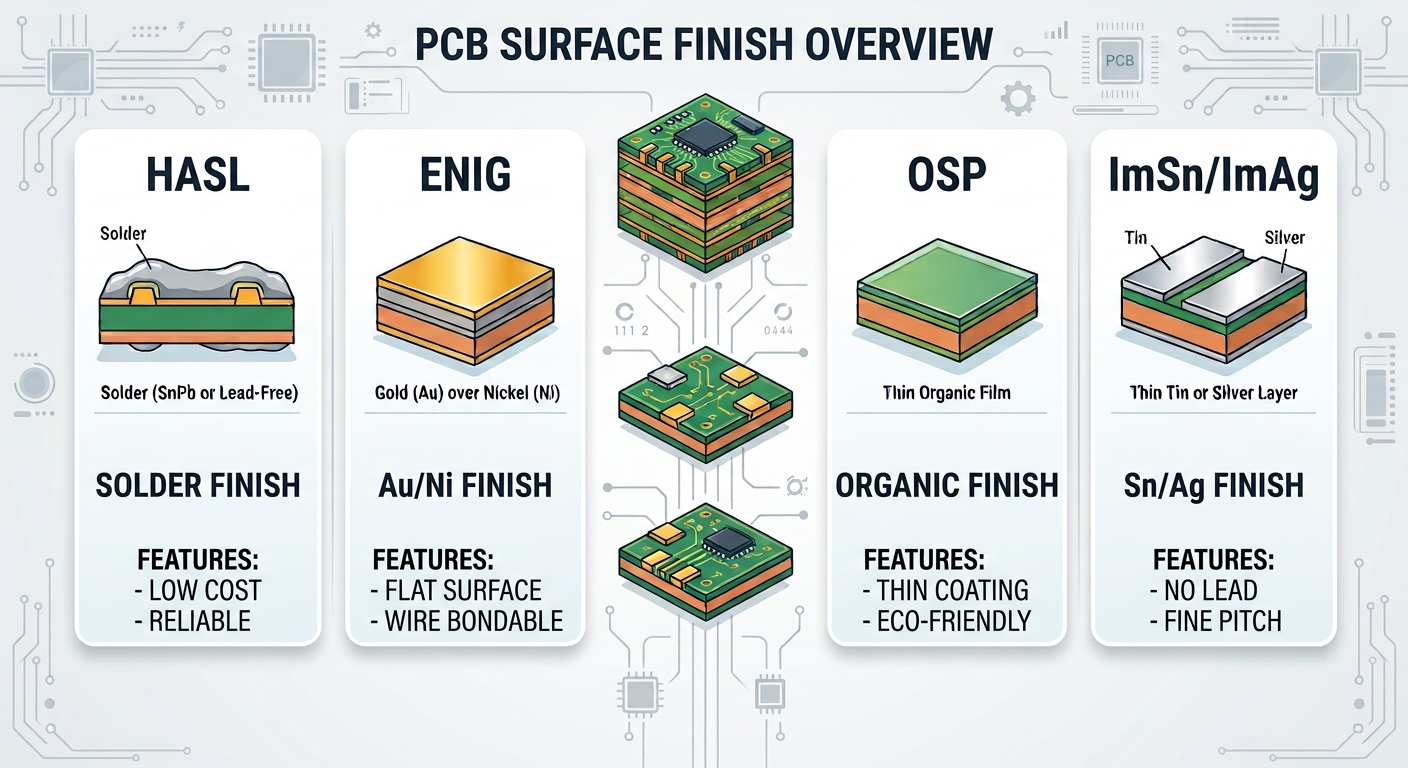
For keyboards requiring excellent soldering consistency or hot-swap support, ENIG is often preferred because of its superior surface flatness and durability. However, the final choice should always be based on product requirements, budget, and manufacturing priorities.
3. SMT and Through-Hole Assembly Must Work Together
Unlike many consumer electronics that rely primarily on Surface Mount Technology (SMT), mechanical keyboard PCBs often require a combination of SMT and Through-Hole Technology (THT).
For example, MCUs, diodes, resistors, capacitors, and RGB LEDs are generally assembled using SMT, while USB connectors, certain connectors, and some hot-swap sockets may require through-hole soldering. Coordinating these processes is essential for maintaining both production efficiency and assembly quality.
If you would like to learn more about SMT processes in PCB assembly, you can also read the HRPCBA article "How Does LED PCB Assembly Work?", which explains the key stages of LED PCB assembly and quality control. Many of the manufacturing principles discussed there also apply to consumer electronic products, including mechanical keyboards.
4. Comprehensive Quality Inspection Improves Long-Term Reliability
After PCB fabrication and assembly are completed, multiple inspection procedures are required to ensure that every key functions correctly and that the finished product meets long-term reliability requirements.
Common inspection procedures include:
-
AOI (Automated Optical Inspection): Detects soldering defects, missing components, and alignment issues.
-
Flying Probe Testing: Identifies open circuits and shorts without dedicated fixtures.
-
Electrical Testing: Confirms electrical continuity and circuit integrity.
-
Functional Testing (when applicable): Verifies key response, USB communication, and lighting performance.
A comprehensive quality control process reduces the likelihood of product failures while improving long-term consistency and reliability—one of the defining characteristics of experienced PCB manufacturers.
How to Choose a Reliable Mechanical Keyboard PCB Manufacturer?
A well-designed PCB is only part of a successful mechanical keyboard project. Reliable mass production depends on whether the manufacturer has proven fabrication capabilities, effective quality management, and strong engineering support. From prototype development to volume production, every stage can influence product quality, delivery time, and overall cost.
1. Evaluate PCB Manufacturing Precision
Mechanical keyboard PCBs contain a large number of precisely positioned switch mounting holes, making manufacturing accuracy particularly important. When evaluating a supplier, pay attention to drilling capability, circuit pattern accuracy, and layer registration, as these factors directly affect assembly consistency and product quality.
2. Look for One-Stop PCB and PCBA Services
When PCB fabrication and component assembly are handled by different suppliers, communication, quality control, and production scheduling can become more complicated. A manufacturer that offers both PCB fabrication and PCB assembly services can simplify the supply chain and improve overall project efficiency.
For companies developing new keyboard products, integrated manufacturing services can also help accelerate prototype validation and shorten the overall product development cycle.
3. Quality Management Matters
Manufacturing equipment is only one part of the equation. A reliable quality management system is equally important. Comprehensive inspection procedures—including incoming material inspection, in-process quality control, AOI, electrical testing, and final inspection—help ensure that every production batch meets design specifications.
For products such as mechanical keyboards that are expected to endure years of daily use, consistent manufacturing quality is often more valuable than achieving the lowest possible production cost.
4. Engineering Support and DFM Assistance
Experienced manufacturers do more than fabricate PCBs. They can also provide Design for Manufacturability (DFM) recommendations during the early stages of product development. Suggestions regarding pad design, mounting hole dimensions, component placement, or production processes can help improve yield while reducing manufacturing risks.
This type of engineering support is particularly valuable for companies launching a new keyboard product or preparing for large-scale production.
Conclusion
Although mechanical keyboard PCBs share many of the same fabrication processes as conventional PCBs, their design priorities are significantly different. In addition to electrical connectivity, they must address keyboard matrix architecture, mechanical durability, RGB lighting integration, and long-term reliability.
For product developers, understanding these differences can help optimize designs, reduce manufacturing risks, and improve overall product quality. For sourcing professionals, selecting a manufacturing partner with strong PCB fabrication, PCB assembly, and engineering capabilities can simplify supply chain management and support long-term project success.
As the mechanical keyboard market continues to evolve, customer expectations for quality, customization, and reliability will continue to rise. Advances in PCB manufacturing and assembly technologies will remain a key driver behind the next generation of mechanical keyboard products.
Frequently Asked Questions
Q1: What are the key differences between a mechanical keyboard PCB and a standard PCB?
A: Mechanical keyboard PCBs place greater emphasis on key matrix design, mechanical strength, long-term switch actuation reliability, and RGB lighting circuitry, whereas standard PCBs typically focus more on the functional requirements and electrical performance of specific electronic products.
Q2: Do mechanical keyboard PCBs typically use two-layer or four-layer boards?
A: Most wired mechanical keyboards function adequately with a two-layer PCB; however, products with more complex features—such as wireless connectivity, multi-zone RGB lighting, or high-density circuit layouts—may utilize four-layer PCBs.
Q3: What additional requirements do hot-swappable keyboards impose on the PCB?
A: Hot-swappable designs require PCBs to have superior pad strength, via reliability, and mechanical durability to withstand the stress caused by repeatedly inserting and removing mechanical switches.
Q4: How should one select a manufacturer for mechanical keyboard PCBs?
A: It is advisable to evaluate factors such as manufacturing precision, quality management systems, engineering support capabilities, and the availability of one-stop services (combining PCB fabrication and PCBA assembly), rather than focusing solely on price.
Learn more about PCB manufacturing and assembly solutions:
HRPCBA Official Website: https://www.hrpcba.com




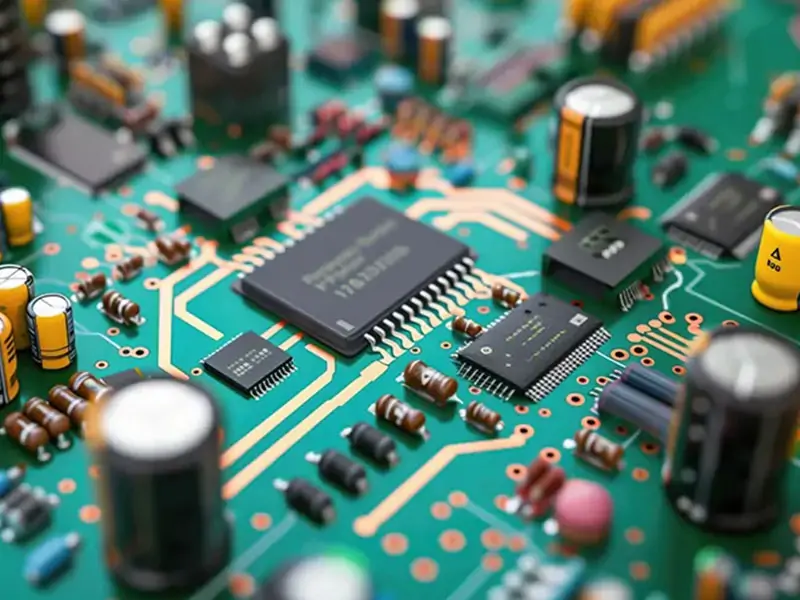 PCB AssemblyHRPCBA is a PCBA China manufacturer offering high-quality PCB assembly services with full-process support, from design to assembly and testing.
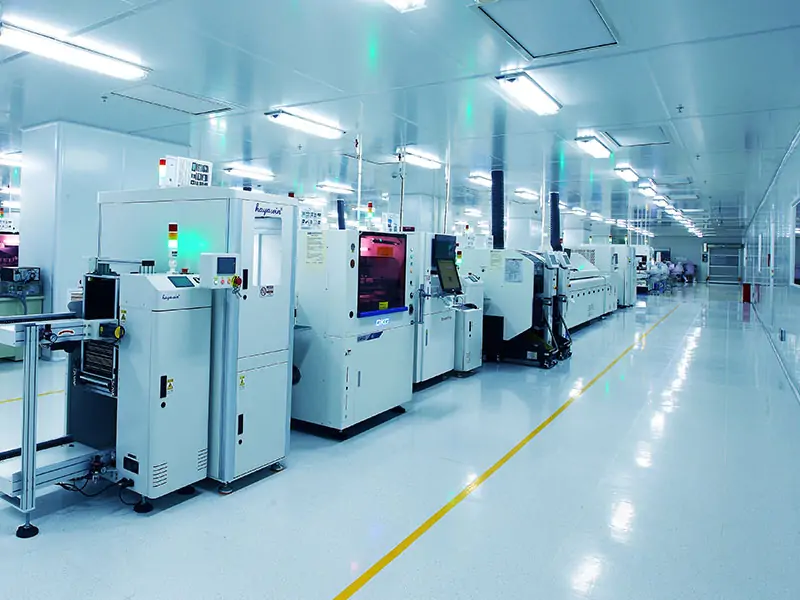 PCB ManufacturingHRPCBA is a leading PCB board manufacturer offering precision PCB fabrication services. Get high-quality boards with fast turnaround and competitive pricing
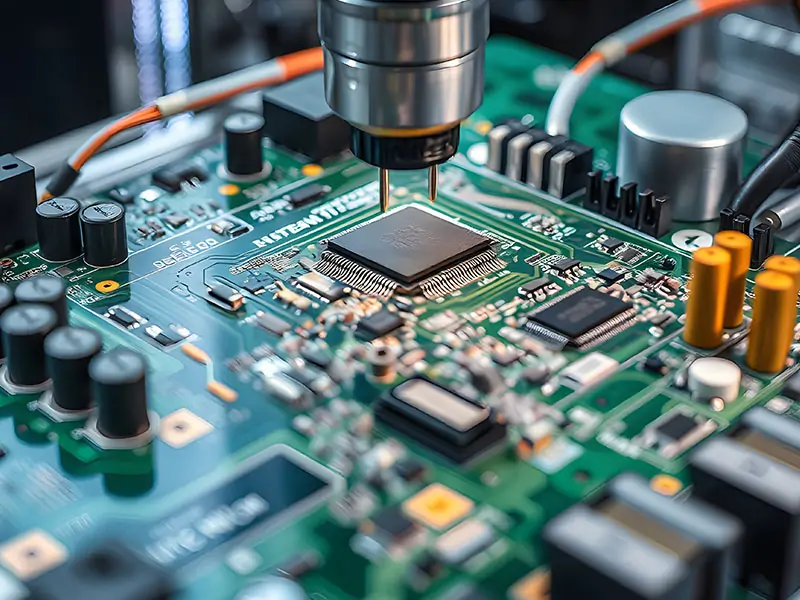 CapabilitiesDiscover HRPCBA’s robust PCB capabilities in custom PCB manufacturing services, where we transform your ideas into high-quality, functional circuit boards.