Introduction
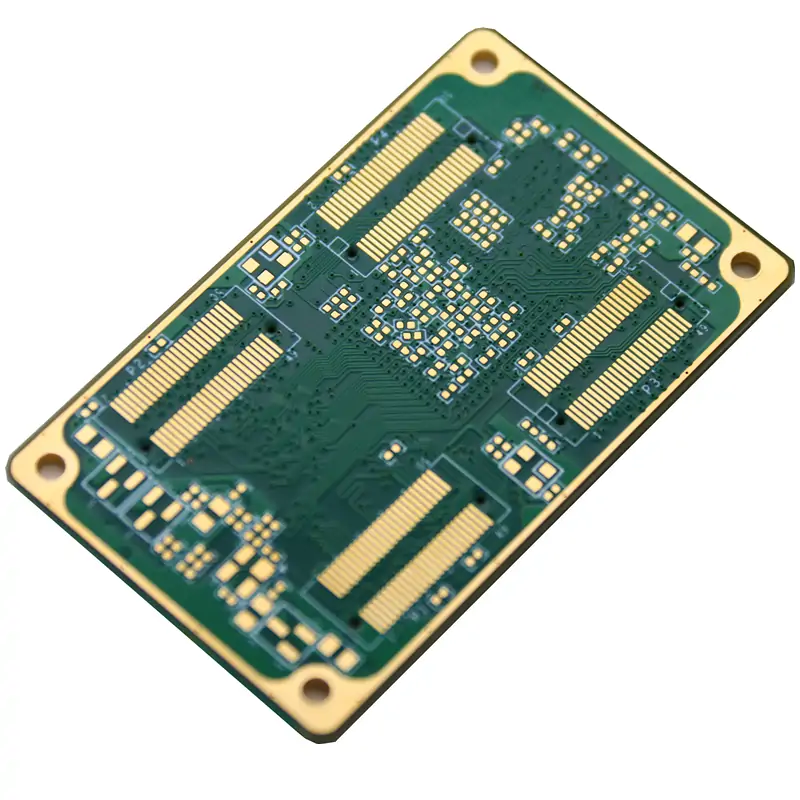
Every electronic product we use today, from smart devices and industrial equipment to automotive systems and medical instruments, depends on a reliable electronic circuit board. However, a bare PCB (Printed Circuit Board) cannot perform any function by itself. It only provides the physical structure and electrical pathways needed for components to communicate.
The process that transforms a simple PCB into a functional electronic module is called Electronic Board Assembly.
Electronic Board Assembly is a critical stage in electronics manufacturing where components such as integrated circuits (ICs), resistors, capacitors, connectors, and other electronic parts are mounted onto a PCB and connected through soldering and testing processes.
For companies developing electronic products, understanding how board assembly works can help improve product reliability, reduce manufacturing risks, and select the right manufacturing partner.
What Is Electronic Board Assembly?
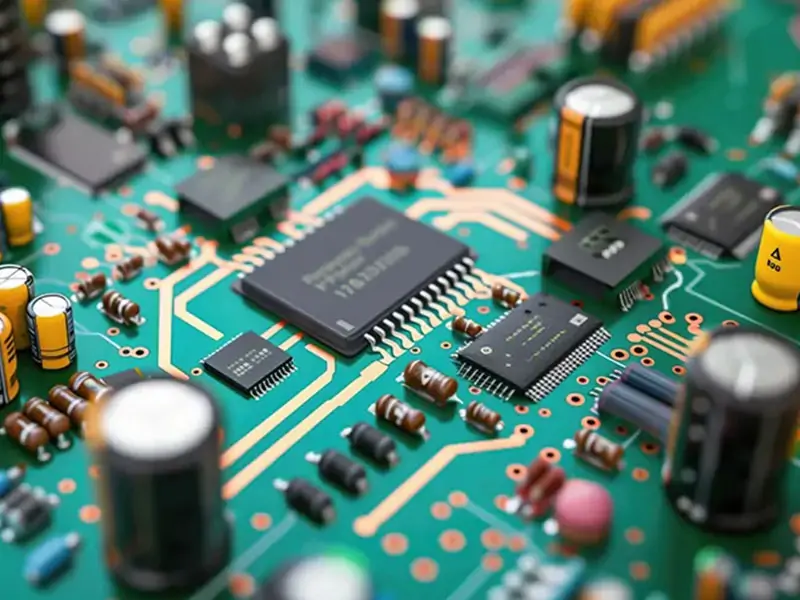
Electronic Board Assembly refers to the complete process of assembling electronic components onto a printed circuit board to create a working circuit assembly, commonly known as a PCBA (Printed Circuit Board Assembly).
A PCB provides the foundation for electrical connections, while the assembly process adds the necessary components that allow the board to perform specific functions.
The main elements involved in electronic board assembly include:
- PCB substrate: The base board containing copper traces and electrical connections.
- Electronic components: Including ICs, capacitors, resistors, connectors, and other parts.
- Solder materials: Used to create reliable electrical and mechanical connections.
- Assembly equipment: Automated machines used for component placement and soldering.
- Inspection and testing systems: Used to verify quality and performance.
The difference between PCB and electronic board assembly can be explained as follows:
| Item |
PCB |
Electronic Board Assembly |
| Definition |
Bare printed circuit board |
PCB with electronic components installed |
| Main purpose |
Provides electrical connections |
Creates a functional electronic circuit |
| Manufacturing stage |
PCB fabrication |
Component assembly and testing |
| Includes components |
No |
Yes |
| Final product |
Circuit carrier |
Working electronic module |
In simple terms, PCB manufacturing creates the board, while electronic board assembly turns that board into a usable electronic product.
How Does Electronic Board Assembly Work?
Electronic board assembly involves multiple controlled manufacturing steps. Each stage affects the final reliability and performance of the product.
PCB and Component Preparation
Before assembly begins, manufacturers prepare all required production files and materials.
Common production files include:
- Gerber files for PCB manufacturing information
- Bill of Materials (BOM) for component specifications
- Pick-and-place files for automated component placement
The BOM is especially important because it defines every component required for assembly, including part numbers, quantities, and specifications.
At this stage, manufacturers also verify component availability, PCB specifications, and assembly requirements to prevent production issues.
A well-designed PCB can significantly improve assembly efficiency. Engineers usually consider manufacturing requirements during the design stage.
For more information about PCB design principles, you can read our related article:
How to Design a PCB That Works Reliably?
www.hrpcba.com/blog/how-to-design-pcb.
SMT Component Placement and Solder Paste Printing
For modern electronic products, Surface Mount Technology (SMT) is one of the most widely used assembly methods.
The SMT process begins with solder paste printing. A stencil is placed over the PCB, and solder paste is applied onto specific component pads.
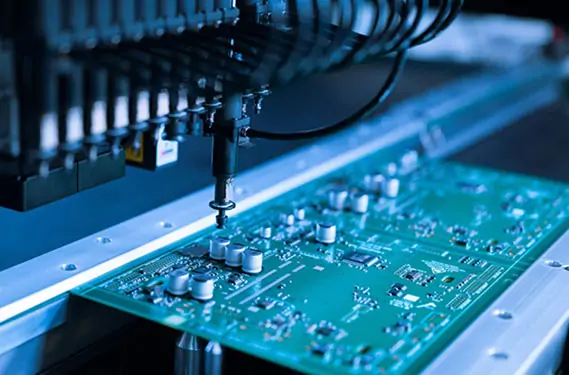
After that, automated pick-and-place machines accurately position surface mount components onto the PCB.
Typical SMT components include:
- Microcontrollers
- Integrated circuits
- Resistors
- Capacitors
- LED components
The main advantages of SMT assembly include:
- High component density
- Faster production speed
- Support for smaller electronic designs
- Improved automation efficiency
Because modern electronic products require compact designs and advanced functionality, SMT has become an essential technology in PCB assembly manufacturing.
Reflow Soldering Process
After SMT components are placed, the PCB passes through a reflow oven.
During reflow soldering, the temperature is carefully controlled through several stages:
| Stage |
Purpose |
| Preheating |
Gradually increases PCB temperature |
| Thermal soaking |
Stabilizes temperature across the board |
| Reflow |
Melts solder paste to create connections |
| Cooling |
Solidifies solder joints |
The goal of reflow soldering is to create strong electrical and mechanical connections between components and the PCB.
Incorrect temperature profiles or solder conditions may result in defects such as weak solder joints or poor connections. Therefore, precise process control is essential during manufacturing.
Through-Hole Assembly
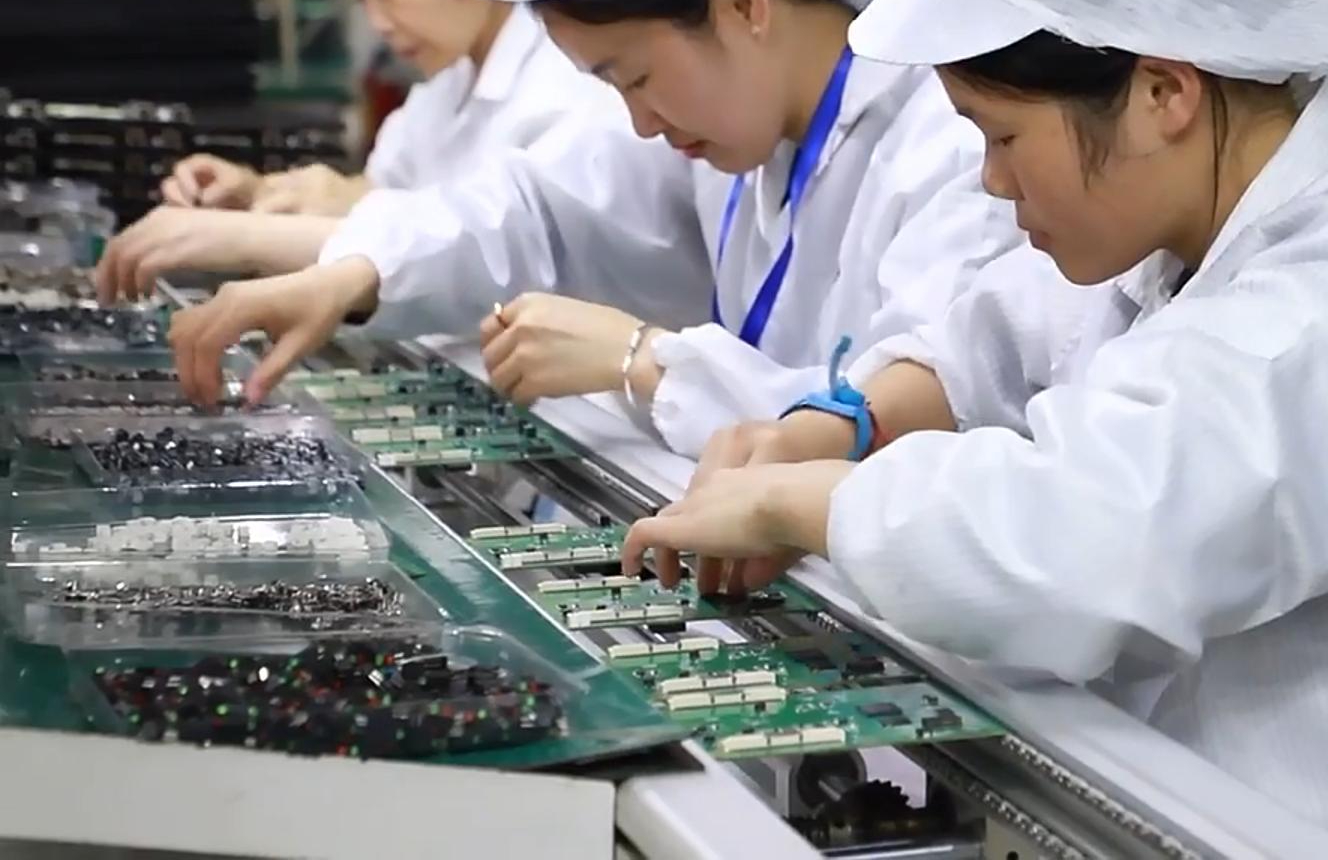
Although SMT is widely used in modern electronics, through-hole technology (THT) remains important for many applications.
Through-hole components have leads that pass through drilled holes in the PCB and are soldered on the opposite side.
This technology provides:
- Strong mechanical connections
- High durability
- Good performance for larger components
Through-hole assembly is commonly used for components that experience mechanical stress, higher power requirements, or require stronger physical support.
Many complex electronic products use a combination of SMT and through-hole assembly, known as mixed technology assembly.
Inspection and Testing
Quality control is one of the most important parts of electronic board assembly.
Professional manufacturers use multiple inspection methods to identify potential issues before products reach customers.
Automated Optical Inspection (AOI)
AOI systems use cameras to inspect PCB assemblies and identify problems such as:
- Missing components
- Incorrect component placement
- Soldering defects
X-Ray Inspection
X-Ray inspection allows manufacturers to check hidden solder joints, especially for complex component packages where visual inspection is difficult.
Functional Testing
Functional testing verifies whether the assembled board operates according to design requirements.
Testing may include:
- Electrical performance checks
- Signal verification
- Product function validation
A complete inspection system helps improve product consistency and reduce manufacturing failures.
Main Types of Electronic Board Assembly
Different products require different assembly approaches.
| Assembly Type |
Characteristics |
Common Applications |
| SMT Assembly |
High density, automated production |
Consumer electronics, IoT devices |
| Through-Hole Assembly |
Strong mechanical connection |
Industrial equipment, power applications |
| Mixed Assembly |
Combines SMT and THT technologies |
Complex electronic systems |
Choosing the correct assembly method depends on factors such as product design, component type, performance requirements, and production volume.
Applications of Electronic Board Assembly
Electronic board assembly is used across many industries because almost all modern electronic systems require reliable circuit assemblies.
Consumer Electronics
Electronic boards are widely used in smart devices, control systems, and connected products.
Automotive Electronics
Vehicle systems rely on electronic assemblies for control, communication, and power management functions.
Medical Equipment
Medical electronic products require highly reliable circuit assemblies with strict quality control.
Industrial Control Systems
Manufacturing equipment and automation systems depend on durable PCB assemblies for continuous operation.
IoT Devices
Connected sensors and smart devices require compact and efficient electronic boards.
How to Choose a Reliable Electronic Board Assembly Partner?
Selecting the right manufacturing partner is an important decision for product developers.
Several factors should be considered:
Manufacturing Capability
A capable supplier should have experience in:
- PCB assembly
- SMT production
- Through-hole assembly
- Prototype and volume production
Quality Control System
Reliable manufacturers should have inspection and testing capabilities, including:
- AOI inspection
- X-Ray inspection
- Functional testing
Engineering Support
Professional suppliers can provide support during product development, including:
- Design for Manufacturing (DFM) review
- Component sourcing assistance
- Manufacturing optimization
HongRong (Shenzhen) Electronics Co., Ltd. (HRPCBA.com) provides one-stop PCB manufacturing and assembly services, including PCB fabrication, SMT assembly, through-hole assembly, component sourcing, and testing solutions.
By combining manufacturing experience with quality control processes, HRPCBA helps customers develop reliable electronic products.
Conclusion
Electronic Board Assembly is the essential process that transforms a PCB from a simple circuit platform into a functional electronic product.
From PCB preparation and component placement to soldering, inspection, and testing, every manufacturing step influences the final quality and reliability of the assembled board.
As electronic products continue to become smaller, smarter, and more complex, professional PCB assembly capabilities are becoming increasingly important for companies seeking stable and efficient manufacturing solutions.
Choosing an experienced electronic board assembly partner can help ensure better product performance, improved production efficiency, and long-term reliability.
Frequently Asked Questions (FAQ)
1. What is electronic board assembly?
Electronic board assembly is the process of mounting electronic components onto a PCB and creating a functional circuit assembly.
2. What is the difference between PCB and PCBA?
A PCB is a bare circuit board, while a PCBA is a PCB that has electronic components assembled and soldered onto it.
3. What are the main electronic board assembly methods?
The main methods include SMT assembly, through-hole assembly, and mixed technology assembly.
4. Why is PCB assembly inspection important?
Inspection helps detect manufacturing defects and ensures assembled boards meet reliability requirements.
5. Can electronic board assembly support both prototypes and mass production?
Yes. Professional PCB assembly manufacturers typically support different production volumes, from prototypes to large-scale manufacturing.
About HRPCBA
HongRong (Shenzhen) Electronics Co., Ltd. is a professional PCB manufacturing and assembly provider offering one-stop solutions for global customers, including PCB fabrication, SMT assembly, through-hole assembly, turnkey PCB assembly, component sourcing, and testing services.
Website: HRPCBA.com



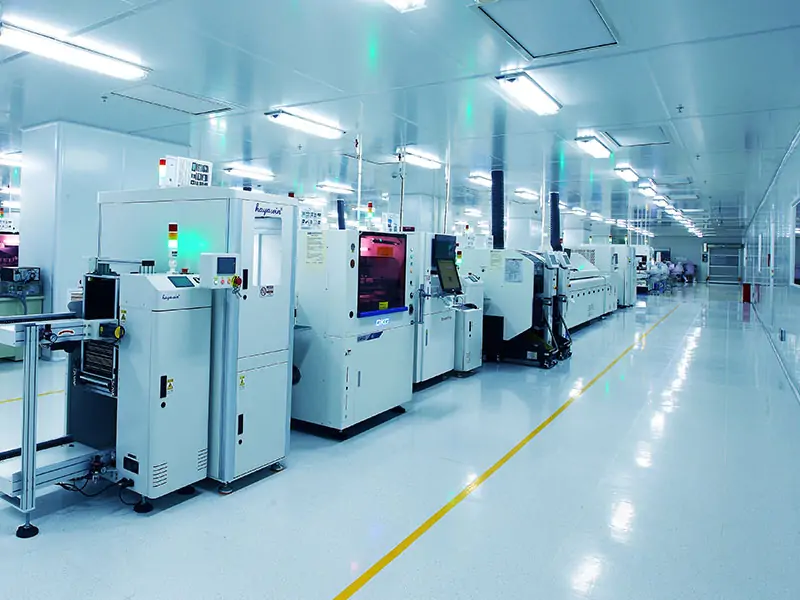
 PCB AssemblyHRPCBA is a PCBA China manufacturer offering high-quality PCB assembly services with full-process support, from design to assembly and testing.
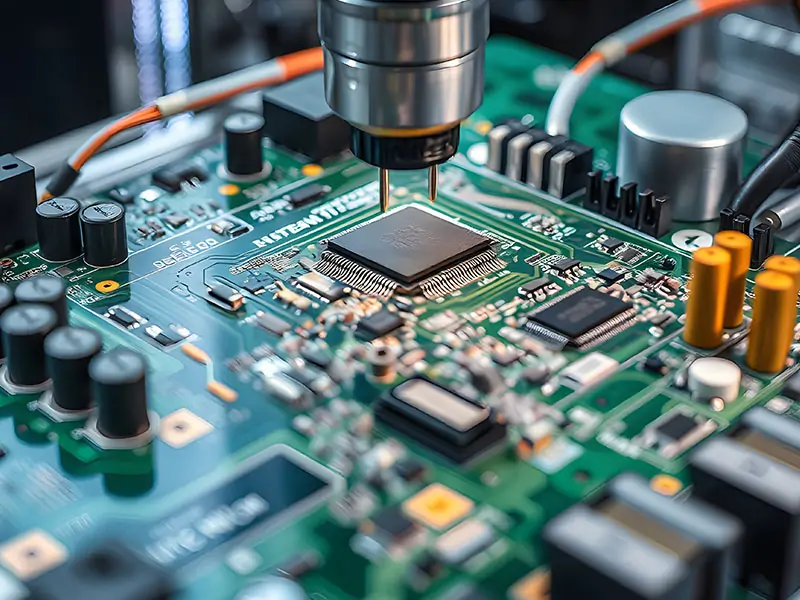
 PCB ManufacturingHRPCBA is a leading PCB board manufacturer offering precision PCB fabrication services. Get high-quality boards with fast turnaround and competitive pricing
 CapabilitiesDiscover HRPCBA’s robust PCB capabilities in custom PCB manufacturing services, where we transform your ideas into high-quality, functional circuit boards.