A Deep Guide to PCB Edge Beveling Quality and Reliability
Why PCB Beveling Matters More Than You ThinkIn PCB manufacturing, many customers focus mainly on circuit design, material selection, layer count, and surface finishing processes. However, one important manufacturing detail is often overlooked — PCB edge processing.
For standard PCBs installed in fixed positions, edge treatment may seem like a minor detail. However, for PCBs that require frequent insertion and removal, long-term operation, or high mechanical reliability, the quality of PCB beveling can directly affect assembly performance, durability, and product lifespan.A high-quality PCB beveling process is not simply about creating an angled edge. It involves precise machining control, dimensional accuracy, and strict quality management. Proper beveling helps reduce mechanical stress, improve connector engagement, and enhance the overall reliability of electronic products.
As a professional PCB manufacturing and PCBA assembly supplier, HRPCBA focuses on every manufacturing detail that affects PCB reliability, including edge processing, dimensional control, and production quality inspection. Learn more about our PCB and PCBA capabilities here:
https://www.hrpcba.com
Ⅰ. What Is PCB Beveling and Why Does a PCB Need It?
PCB beveling refers to the process of machining the edge of a printed circuit board into an angled surface instead of leaving a standard vertical edge.
Unlike a normal PCB edge created by cutting or routing, a beveled edge provides a smoother transition area, making it easier for the PCB to be inserted into connectors while reducing mechanical resistance during assembly.
PCB beveling is commonly used in applications such as:
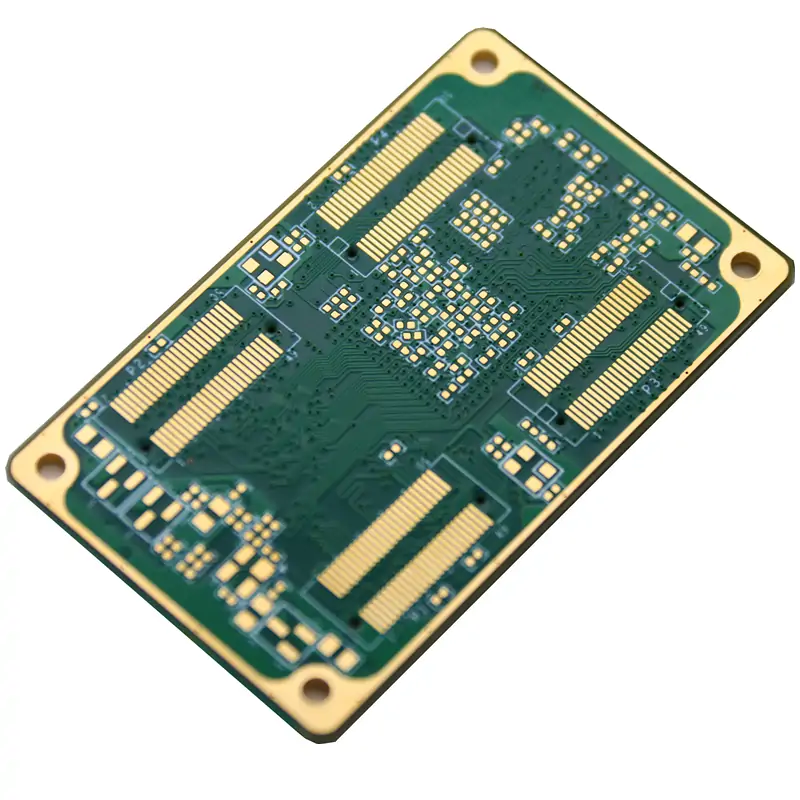
- Gold finger PCBs
- Plug-in interface boards
- Industrial control boards
- Communication modules
- Testing equipment boards
For example, gold finger PCBs are often inserted into connectors multiple times during their service life. If the PCB edge is not properly processed, excessive insertion force or uneven contact pressure may accelerate wear on both the PCB and connector.
Therefore, PCB beveling has become an important manufacturing step for improving mechanical reliability.
PCB Beveling vs Standard PCB Edge Processing
| Comparison Item |
Standard PCB Edge |
Beveled PCB Edge |
| Edge structure |
Vertical cutting edge |
Angled machining surface |
| Insertion performance |
Higher insertion resistance |
Smoother connector insertion |
| Mechanical stress |
Stress concentrated at edge |
Reduced edge pressure |
| Typical applications |
Fixed installation boards |
Plug-in and high-reliability applications |
It is important to understand that not every PCB requires beveling. The decision depends on the product structure, connector design, and application environment.
Ⅱ. How Does High-Quality PCB Beveling Improve Durability?
The durability of a PCB depends not only on electrical design and materials but also on mechanical manufacturing quality.
1. Reducing Mechanical Damage During Insertion and Removal
For plug-in PCBs, the edge area experiences repeated mechanical force during insertion and removal.
Without proper beveling, several problems may occur:
- Increased insertion resistance;
- Greater friction between PCB and connector;
- Faster edge wear after repeated use.
A precisely machined bevel allows the PCB to enter the connector more smoothly, reducing unnecessary mechanical stress.
This is especially important in:
- Industrial control systems;
- Test equipment;
- Communication devices;
- Modular electronic systems.
In these applications, PCBs may experience frequent connection cycles, making edge quality a key factor in long-term reliability.
2. Reducing Edge Stress Concentration
A PCB is composed of multiple materials, including copper layers, resin, and fiberglass reinforcement. During mechanical assembly, the PCB edge can become an area where stress accumulates.
Sharp or poorly processed edges may create:
- Localized mechanical pressure;
- Higher risk of damage during assembly;
- Increased vulnerability for thin PCBs.
A properly designed bevel helps distribute mechanical stress more evenly.
This is particularly valuable for:
- Multilayer PCBs;
- Thin PCB designs;
- HDI PCBs.
For more information about PCB reliability design principles, you can also refer to HRPCBA’s technical article:
How to Design a PCB That Works Reliably?
www.hrpcba.com
3. Improving Production Consistency
For mass PCB production, manufacturing consistency is essential.
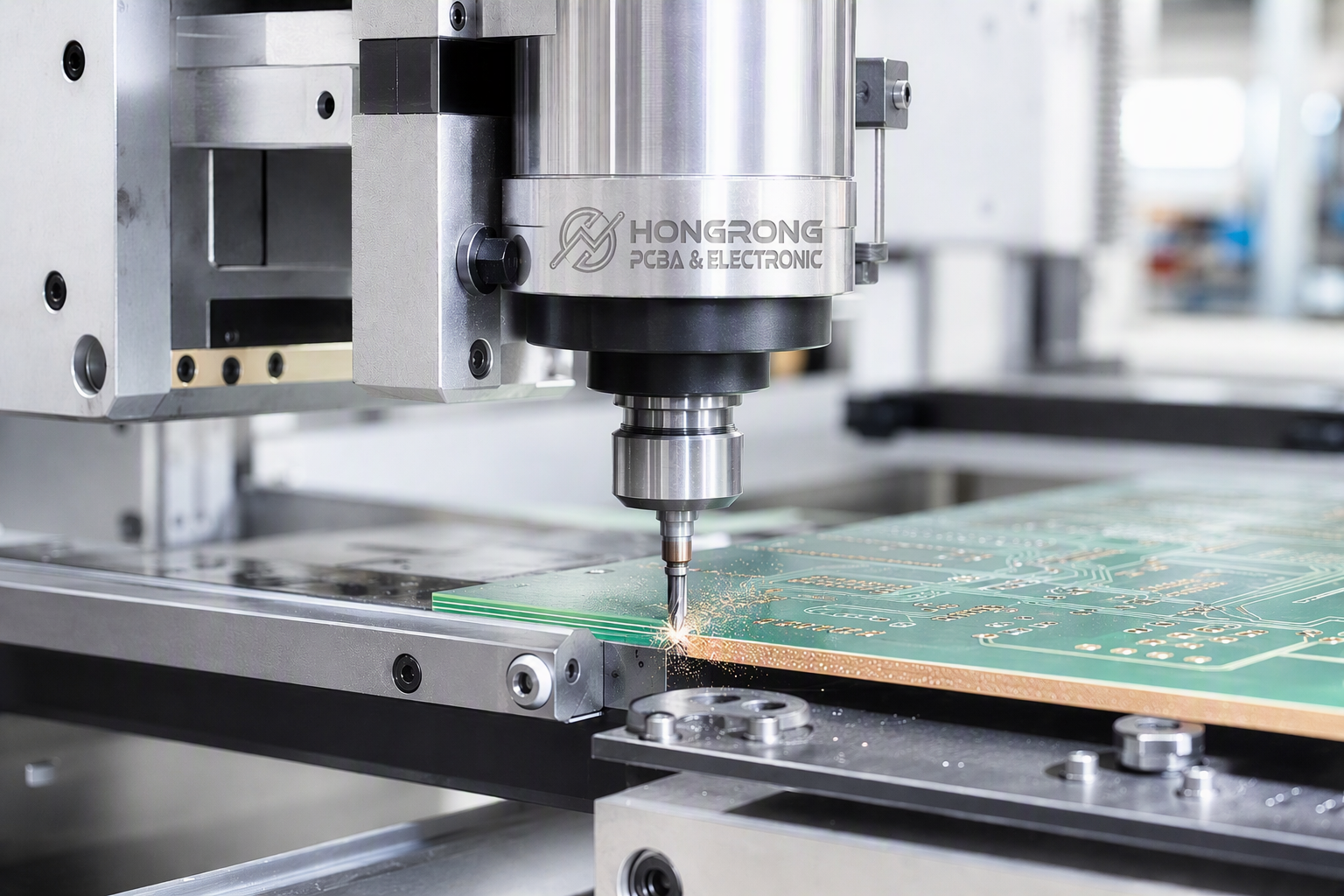
A reliable beveling process requires accurate control of:
- Bevel angle;
- Bevel depth;
- Machining position;
- Edge surface quality.
If bevel dimensions vary between production batches, the final assembly process may be affected.
Professional PCB manufacturers use standardized production processes and inspection methods to maintain consistent quality across different orders.
Ⅲ. Why Does PCB Beveling Also Improve Product Safety?
Many people associate PCB safety mainly with electrical performance, such as insulation distance, impedance control, or voltage testing.
However, mechanical safety is also an important part of PCB reliability.
1. Reducing Risks Caused by Edge Burrs
During PCB manufacturing, boards typically go through processes such as:
- Cutting;
- Routing;
- Drilling;
- Profile machining.
If edge processing is not properly controlled, issues such as:
- Sharp edges;
- Fiberglass exposure;
- Machining residue;
may occur.
These problems can affect both assembly efficiency and operator safety.
A proper beveling process creates a smoother edge surface and improves overall manufacturing quality.
2. Improving Connection Reliability
For plug-in PCB applications, beveling affects not only mechanical assembly but also connection stability.
Improper edge processing may result in:
- Incomplete PCB insertion;
- Incorrect contact positioning;
- Abnormal insertion force.
Over time, these issues may influence:
- Signal transmission stability;
- Product service life;
- System reliability.
Therefore, PCB bevel dimensions should be considered together with connector specifications during the design stage.
Ⅳ. Why Choose Our PCB Beveling Process?
A PCB bevel may look like a small manufacturing detail, but it reflects a manufacturer’s ability to control precision and quality.
HRPCBA provides one-stop PCB manufacturing and PCBA assembly solutions, helping customers achieve reliable electronic production from prototype to mass production.
Learn more about HRPCBA’s manufacturing capabilities:
www.hrpcba.com/capabilities
1. Precise Control of Bevel Dimensions
A professional PCB beveling process requires accurate control of:
- Bevel angle;
- Machining depth;
- Edge location.
Precise machining helps prevent:
- Insufficient beveling that causes assembly difficulties;
- Excessive beveling that affects PCB structure;
- Dimensional inconsistency between production batches.
2. Complete Quality Inspection System
PCB reliability depends on the entire manufacturing process, not just a single operation.
Common quality control methods include:
| Inspection Method |
Purpose |
| Visual inspection |
Check PCB edge and surface quality |
| Dimensional inspection |
Verify PCB size accuracy |
| AOI inspection |
Detect circuit manufacturing defects |
| Electrical testing |
Confirm electrical performance |
Through multiple inspection stages, potential manufacturing risks can be reduced before products reach customers.
3. Supporting Different PCB Manufacturing Requirements
Different industries require different PCB solutions.
HRPCBA supports:
- Single-sided PCB manufacturing;
- Double-sided PCB manufacturing;
- Multilayer PCB manufacturing;
- HDI PCB manufacturing;
- PCB assembly services.
Additional services include:
- Component sourcing;
- SMT assembly;
- Testing services;
- Turnkey PCBA solutions.
Ⅴ. What Factors Should Be Considered When Choosing PCB Beveling?
PCB beveling is not simply a machining operation. It needs to be designed according to the actual application requirements.
1. PCB Thickness
PCB thickness directly affects machining stability.
For example:
- Thin PCBs require careful processing to prevent deformation;
- Thick PCBs require accurate machining control to maintain proper bevel dimensions.
2. Operating Environment
When selecting a beveling process, engineers should consider:
- Number of insertion cycles;
- Operating temperature;
- Vibration conditions;
- Expected product lifetime.
Industrial applications usually require higher mechanical reliability compared with standard consumer electronics.
3. PCB Material Selection
Different PCB materials have different machining characteristics.
Common PCB materials include:
- FR-4;
- High-frequency materials;
- Metal core PCBs.
Manufacturing parameters need to be adjusted according to material properties to achieve stable results.
Ⅵ. Conclusion: Small Details Create Long-Term PCB Reliability
Although PCB beveling is only one step in the manufacturing process, it plays an important role in product assembly, safety, and long-term performance.
A high-quality PCB beveling process can:
- Reduce mechanical damage during insertion;
- Improve connector reliability;
- Minimize edge-related risks;
- Enhance production consistency.
For electronic products that require high reliability, choosing an experienced PCB manufacturing partner is essential.
With professional PCB fabrication, assembly capabilities, and strict quality management, HRPCBA provides reliable PCB and PCBA manufacturing solutions for customers worldwide.
If you are looking for a trusted PCB manufacturing and assembly partner, visit HRPCBA to learn more about our services:
https://www.hrpcba.com




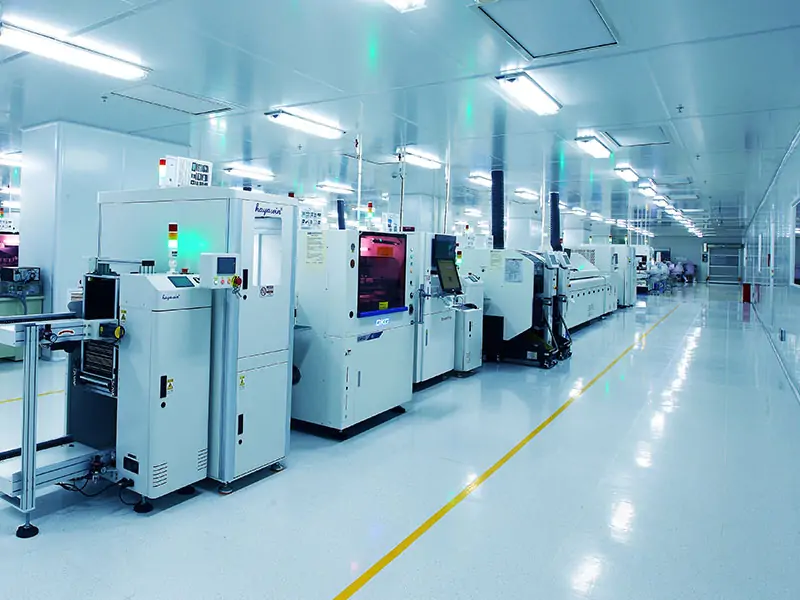
 PCB AssemblyHRPCBA is a PCBA China manufacturer offering high-quality PCB assembly services with full-process support, from design to assembly and testing.
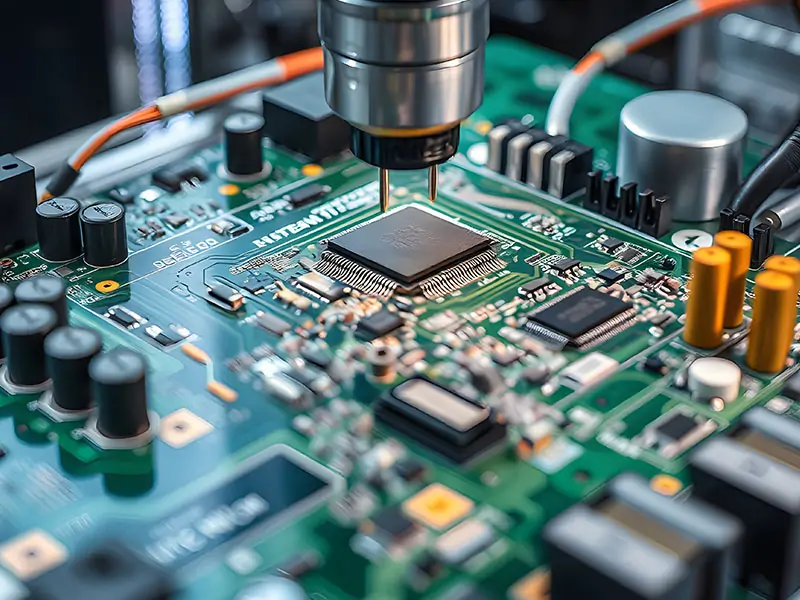
 PCB ManufacturingHRPCBA is a leading PCB board manufacturer offering precision PCB fabrication services. Get high-quality boards with fast turnaround and competitive pricing
 CapabilitiesDiscover HRPCBA’s robust PCB capabilities in custom PCB manufacturing services, where we transform your ideas into high-quality, functional circuit boards.