In PCB manufacturing and assembly, cleaning is not a secondary or optional process. It is a core quality-control step that directly affects electrical performance, long-term reliability, and product lifespan. Improper PCB cleaning may not cause immediate failure—but it often leads to latent defects, which are far more costly once products reach the market.
In our previous article, “How to Clean a PCB Without Damaging Components?”, we focused on safe cleaning principles at a general level. In this article, we will explain the right, production-level way to clean a PCB board, and why working with a professional PCB & PCBA manufacturer makes a measurable difference.
Why PCB Cleaning Directly Affects Product Reliability
Many electronic failures are not caused by poor design, but by process-related contamination left on the PCB after assembly.
Flux residues, ionic contaminants, and trapped moisture can slowly degrade circuit performance. Over time, this may result in:
-
Electrical leakage paths forming between conductors
-
Reduced insulation resistance
-
Signal distortion in high-speed or RF circuits
-
Corrosion under fine-pitch components such as BGA and QFN
These issues often appear weeks or months after deployment, especially in humid or high-temperature environments—making them difficult to trace back to the root cause.
What Contaminates a PCB During Manufacturing and Assembly?
During PCB fabrication and PCBA processes, contamination can occur at multiple stages.
Common sources include
-
Flux residues generated during soldering and reflow
-
Dust and micro-particles from the production environment
-
Fingerprints and oils introduced during handling or inspection
-
Ionic residues from materials, chemicals, or water
-
Moisture trapped beneath components or in vias
Different contamination types require different cleaning strategies. Treating all PCBs the same often leads to incomplete cleaning or hidden reliability risks.
What’s the Right Way to Clean a PCB Board in PCBA Production?
1. Evaluate PCB Design and Application Requirements
Professional PCB cleaning always starts with understanding the board itself.
Key factors include:
-
Component density and package types
-
Soldering process and flux formulation
-
Operating voltage and signal frequency
-
End-use environment (industrial, medical, automotive, etc.)
For example, a high-frequency PCB or industrial control board requires a much stricter cleanliness level than a basic consumer product.
2. Select the Most Suitable Cleaning Method
►IPA (Isopropyl Alcohol) Cleaning
IPA cleaning is commonly used for prototypes, repairs, and low-volume production.
-
90%–99% IPA effectively dissolves most flux residues
-
Safe for most electronic components when applied correctly
-
Ideal for manual rework and small-batch PCBA
However, IPA cleaning relies heavily on operator skill and consistency.
►Deionized (DI) Water Cleaning
DI water cleaning is widely used in professional PCBA factories.
-
Especially effective for water-soluble flux
-
Provides uniform cleaning across complex assemblies
-
Requires controlled drying to avoid moisture-related defects
This method is suitable for OEM and ODM projects with stable production volumes.
►Industrial and Automated PCB Cleaning
For high-density, high-reliability, or mass-production PCBs, automated cleaning systems are preferred.
-
Compatible with ultrasonic and inline cleaning equipment
-
Ensures repeatable and consistent cleanliness
-
Reduces human error and process variability
This approach is commonly used in EMS projects and long-term production programs.
3. Controlled Drying and Post-Cleaning Inspection
Cleaning alone is not enough—drying is equally critical.
Moisture left under components can cause:
Professional PCBA manufacturers use:
This ensures the PCB is fully ready for testing, assembly, or shipment.
Manual Cleaning vs. Factory-Level PCB Cleaning
| Cleaning Method |
Typical Use |
Reliability Risk |
| Manual Cleaning |
Prototypes, rework |
Medium |
| Semi-Automated Cleaning |
OEM / ODM batches |
Low |
| Fully Automated Cleaning |
EMS mass production |
Very Low |
For commercial products, factory-level PCB cleaning significantly reduces long-term failure risk and improves consistency.
Why PCB Cleaning Should Be Part of a One-Stop PCBA Solution
When PCB fabrication, assembly, and cleaning are handled by different suppliers, process gaps often appear.
At HongRong (Shenzhen) Electronics Co., Ltd., PCB cleaning is fully integrated into our one-stop PCB manufacturing and assembly services.
Our capabilities include:
-
PCB fabrication
-
PCB assembly (PCBA)
-
Turnkey and one-stop solutions
-
OEM, ODM, and EMS services
By managing the entire process in-house, we ensure that PCB cleanliness, assembly quality, and final reliability are aligned from the start.
What You Gain by Working with an Experienced PCBA Manufacturer
Choosing a professional PCBA partner means more than just manufacturing capacity.
You benefit from:
-
Fewer post-shipment failures
-
Reduced rework and warranty costs
-
Improved product reliability and consistency
-
Faster project execution and time-to-market
As emphasized in How to Clean a PCB Without Damaging Components?
, safe cleaning is essential—but process control and experience are what ensure long-term success.
Looking for a Reliable PCB & PCBA Manufacturing Partner?
If your project requires:
-
Stable and consistent PCB manufacturing
-
Professional PCB assembly
-
One-stop, turnkey, OEM, ODM, or EMS services
HongRong (Shenzhen) Electronics Co., Ltd. is ready to support your project with proven manufacturing processes and quality-focused execution.
⇒Contact us today to discuss your PCB or PCBA requirements and receive a fast, professional quotation.
FAQ: Common Questions About PCB Cleaning in Manufacturing
Q1: Is PCB cleaning always necessary after assembly?
Not every PCB requires the same level of cleaning, but in most professional PCB assembly projects, cleaning is strongly recommended.
PCBs used in industrial, automotive, medical, or high-frequency applications are especially sensitive to flux residues and ionic contamination. Even “no-clean” flux can leave residues that affect long-term reliability.
An experienced PCBA manufacturer will evaluate whether cleaning is required based on design, application, and reliability standards.
Q2: What happens if flux residue is not properly removed from a PCB?
Unremoved flux residue may lead to:
-
Electrical leakage paths
-
Reduced insulation resistance
-
Corrosion under components
-
Signal instability over time
These issues often appear after the product is in the field, making troubleshooting difficult and costly. Proper PCB cleaning during assembly significantly reduces these risks.
Q3: Can improper PCB cleaning damage electronic components?
Yes. Using incorrect solvents, excessive force, or uncontrolled drying can damage components, solder joints, or PCB surfaces.
As discussed in our previous article “How to Clean a PCB Without Damaging Components?”, professional PCB cleaning requires:
-
Correct cleaning agents
-
ESD-safe tools
-
Controlled processes
This is why factory-level cleaning is safer than ad-hoc manual cleaning.
Q4: What PCB cleaning method is best for OEM and ODM projects?
There is no single “best” method—it depends on:
-
Flux type
-
Component density
-
Production volume
-
End-use environment
For OEM and ODM projects, professional PCBA factories often use DI water or automated cleaning systems to ensure consistency, repeatability, and compliance with quality standards.
Q5: How do PCBA manufacturers control moisture after PCB cleaning?
Moisture control is a critical part of the cleaning process.
Professional PCBA manufacturers use:
These measures prevent moisture from being trapped under components such as BGA or QFN packages.
Q6: Is manual PCB cleaning suitable for mass production?
Manual cleaning can be acceptable for prototypes or small rework tasks, but it is not recommended for mass production.
For EMS and volume production, automated or semi-automated PCB cleaning provides:
Q7: Does PCB cleaning affect high-frequency or RF circuit performance?
Yes. High-frequency and RF PCBs are particularly sensitive to contamination.
Flux residues and ionic pollution can:
-
Alter impedance
-
Increase signal loss
-
Introduce noise
This makes professional PCB cleaning especially important for communication, RF, and high-speed digital applications.
Q8: Should PCB cleaning be included in a turnkey PCBA service?
Absolutely. PCB cleaning should be a standard part of a turnkey or one-stop PCBA solution.
When fabrication, assembly, cleaning, and testing are handled by a single supplier, process consistency improves and quality risks are reduced.
Q9: How can buyers ensure a PCBA supplier handles PCB cleaning properly?
Buyers should ask:
-
What cleaning methods are used?
-
How is drying controlled and verified?
-
Is cleaning integrated into the assembly process?
-
Does the supplier support OEM, ODM, and EMS projects?
An experienced PCBA manufacturer can clearly explain their cleaning and quality-control procedures.
Q10: Can HongRong (Shenzhen) Electronics Co., Ltd. support PCB cleaning as part of PCBA service?
Yes. HongRong (Shenzhen) Electronics Co., Ltd. provides one-stop PCB manufacturing and assembly services, where PCB cleaning is fully integrated into the production process.
We support:
-
PCB fabrication
-
PCB assembly (PCBA)
-
Turnkey & one-stop solutions
-
OEM, ODM, and EMS projects
This ensures your PCBs are not only manufactured and assembled—but also cleaned, inspected, and delivered to professional standards.



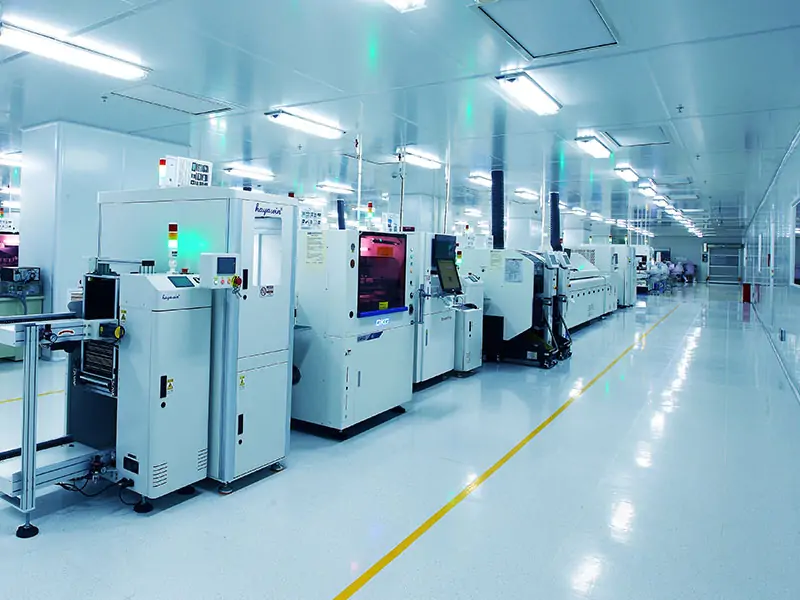
 PCB AssemblyHRPCBA is a PCBA China manufacturer offering high-quality PCB assembly services with full-process support, from design to assembly and testing.
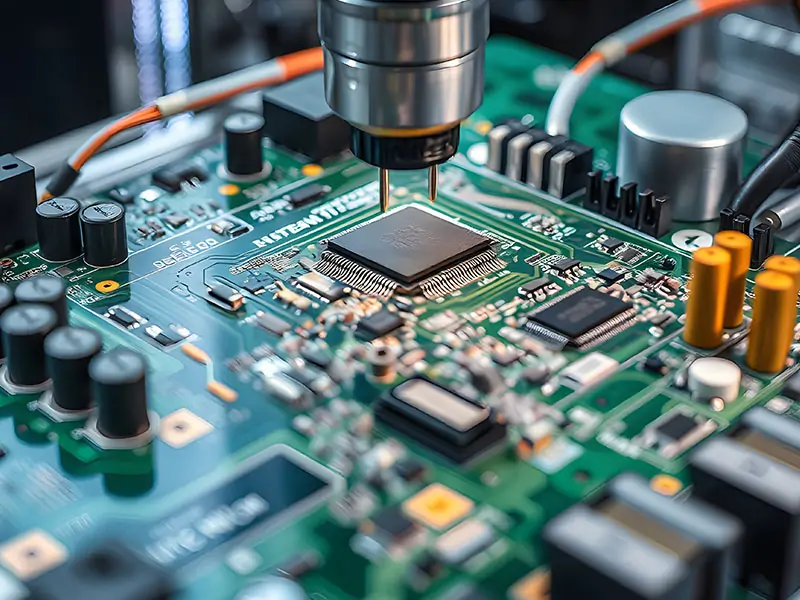
 PCB ManufacturingHRPCBA is a leading PCB board manufacturer offering precision PCB fabrication services. Get high-quality boards with fast turnaround and competitive pricing
 CapabilitiesDiscover HRPCBA’s robust PCB capabilities in custom PCB manufacturing services, where we transform your ideas into high-quality, functional circuit boards.